Update, 15 October: Trump has called off the broadcast. Hasan will be shot by firing squad on 3 December as scheduled, but the execution will not be streamed, he wrote on Truth Social, after learning that Hasan is paralysed and would be killed in a wheelchair.
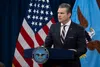
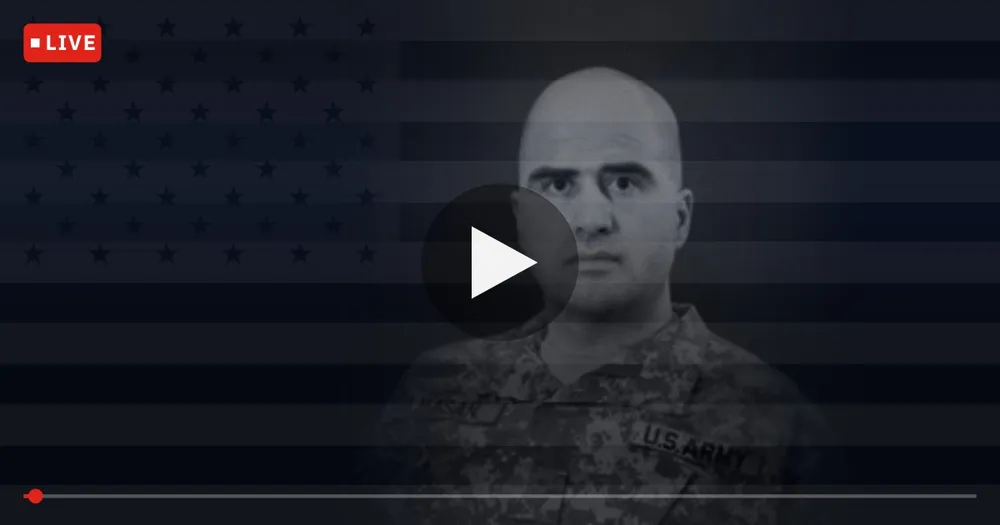
The United States is about to broadcast an execution to the public for the first time. On 3 December at 1 p.m., at Fort Hood in Texas, soldiers with rifles will shoot Nidal Hasan, the Army psychiatrist who killed 13 people there in 2009, and the Pentagon says the public will be able to watch it live. "It's going to be soldiers with rifles executing the firing squad," Defense Secretary Pete Hegseth said. "And we'll make sure that people are able to watch it, that it's public."
The order came from the top. Donald Trump approved Hasan's death sentence on 2 October, on Hegseth's recommendation that the method be a firing squad, and the Pentagon's spokesman announced it on Monday with the words "Judgement day for Hasan has finally come." On Tuesday the Secretary of the Army, Adam Telle, set the date and the place. Army rules give him a window of 60 to 150 days from the president's signature, and the regulation no longer names a method, so a firing squad is whatever the secretary says it is. It will be the first execution by the US military since a hanging in 1961 and the first by firing squad since November 1945. Hasan, who was shot and partially paralysed during his arrest, will face it in a wheelchair.
The last time Americans were formally invited to watch the state kill someone was 14 August 1936, when Rainey Bethea, a Black man, was hanged in a parking lot in Owensboro, Kentucky, in front of a crowd a local paper put at 20,000. The lot was chosen so the crowd would not ruin the courthouse lawn. Hundreds more watched Roscoe Jackson hang in Missouri the next year, some from trees and some through peepholes cut in the fence. Then it stopped. Public executions had been community days out, with sermons and choirs and children brought along, and the carnival of them, Michael Radelet of the University of Colorado told the Associated Press, "really turned people off." No execution in this country has been broadcast since. The Death Penalty Information Center has no record of one ever being livestreamed.
Hegseth may not be able to deliver. Army Regulation 190-55 "directs who is able to be present and that does not include the general public," says John Galligan, a retired colonel and former military judge who represents Hasan. Robin Maher of the Death Penalty Information Center called Hegseth's promise "simply aspirational", with "currently no regulation or precedent" behind it. And Hasan has not finished with the courts. The Supreme Court refused to hear his direct appeal in March 2025, but he can still file for habeas corpus in a civilian court, which Galligan calls "a distinct possibility" and which could push the date back indefinitely. "I think it's more of a public spectacle," Galligan said of the plan to bring Hasan back to the base where he killed. "Political theater."
In 2023, Rolling Stone reported that Trump had told associates he wanted to expand the death penalty and televise executions, including the condemned in their final moments, if he won again. He won again. "This is a president who's about spectacle," Elisabeth Semel of Berkeley Law said. Austin Sarat of Amherst College, who has written about executions for forty years, put it in four words: "Live-streaming will not educate. It will terrorize." Maher noted that public executions "are typically held in authoritarian countries to instill fear in the population." Not everyone agrees. Deborah Denno of Fordham argued a broadcast could make the process "much more transparent" and tell the public what capital punishment is.
Politicians from both sides of the political divide have come out against the barbaric plan. Republican senator Thom Tillis called the plan "beyond disgusting". Chris Murphy called it "disgusting" and "medieval". Jon Ossoff called Hegseth "a deeply unwell person". Damien Echols, who spent 18 years on death row for murders he did not commit, asked people simply not to watch. By Friday the vice president was edging away: "If it's ultimately livestreamed, I'm not going to be watching it," JD Vance said, adding, "I don't know if that's actually going to happen." The president, who signed the order, has since confirmed he personally approved the plan.
One caveat to note, and a serious caveat to note. Public executions, in the sense Maher means, a killing by the state in front of the people to make a point, have not been absent. We have all seen public executions by ICE agents.
The ICE List, which is kept by the Crust News team, counts 90 deaths connected to immigration enforcement since Trump took office, including 22 people killed by agents or during their operations. At least six were shot dead by an agent, on a public street, in daylight, with no charge and no trial. Renée Good was shot through her windshield in Minneapolis in January after dropping her son at school; the president called her the attacker and the video said otherwise. Alex Pretti was tackled by six agents and shot about ten times while filming them. Lorenzo Salgado Araujo was killed at a Houston traffic stop by an agent ICE refused to name. On Thursday in Marble Hill an officer fired seven rounds into a car with a 5-year-old in it. In each case the sentence was pronounced afterwards, by press release: criminal, terrorist, assassin.
Hasan had a trial, a verdict and thirteen years of appeals, and senators from both parties say it is beneath this country to let people watch him die. They are right. They should say the same about the list of people the state has already killed in public, without the trial.