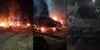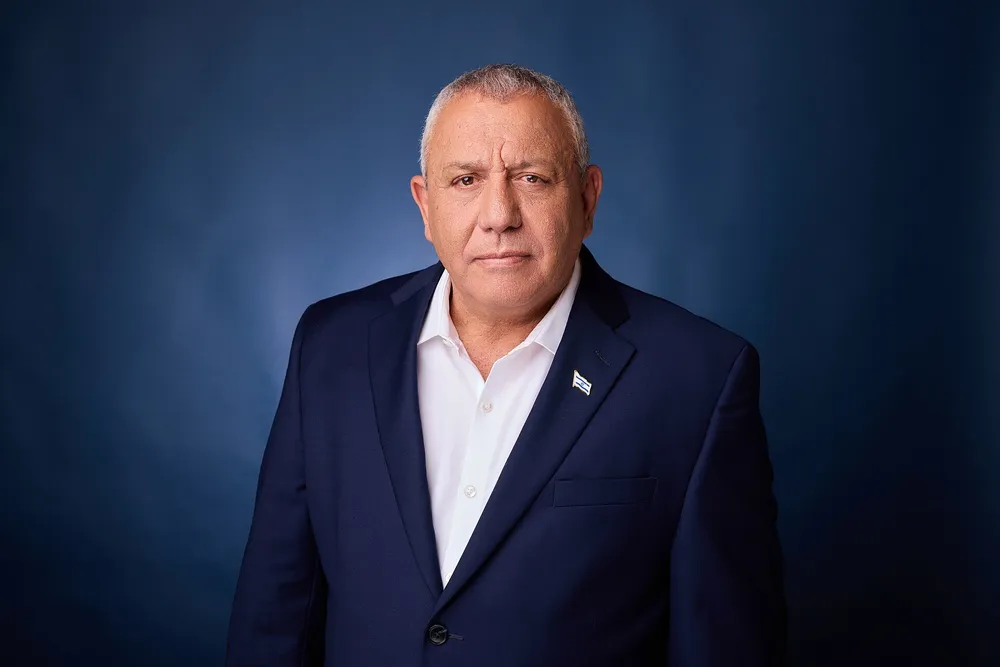
Gadi Eisenkot, the former army chief trying to form Israel's next government, called the burning of Palestinian villages on 22 November "Jewish terrorism in every sense of the word". Israeli terrorists, commonly referred to as settlers, had torched 12 vehicles and set fires beside homes in Kafr Malik, Deir Abu Mash'al and Deir al-Sudan, near Ramallah, before dawn. Eisenkot demanded arrests and "severe sanctions", and said Itamar Ben-Gvir and Bezalel Smotrich had brought the West Bank "to the brink of unchecked anarchy".
The harm he listed was harm to Israel. The arson, he wrote, "undermines regional stability, endangers lives and severely damages the national security and foreign relations of the state of Israel". That is a racist way to measure a crime. Palestinian families watched their cars burn and fires climb the walls of their homes, and the man who wants to govern Israel counted the cost in Israel's security and Israel's reputation. His remedy was more of the security state, with administrative detention and targeted operations by the Shin Bet. Israel already holds thousands of Palestinians under administrative detention, without charge or trial. Defence Minister Israel Katz ended its use against Jewish Israelis in November 2024.
Eisenkot commanded the Israeli army from 2015 to 2019, and that army is the force occupying these villages. In July 2015, five months into his command, Israeli terrorists firebombed the Dawabsheh family's home in Duma and killed 18-month-old Ali and both his parents. In 2018 his snipers shot dead more than 180 Palestinian protesters at the Gaza fence. As head of Northern Command in 2008 he set out what became known as the Dahiya doctrine, promising "disproportionate force" against any village Israel was fired on from. "From our standpoint, these are not civilian villages, they are military bases," he said. He sat in the war cabinet for the first eight months of the genocide in Gaza.
Israel runs two legal systems on the same land, sorted by who you are. Israelis in the West Bank answer to civilian courts. Palestinians answer to military courts, and when a Palestinian attacks Israelis the army bulldozes the family's home, as it did to Wael al-Jabaa's house earlier this month after his son shot two soldiers. Nobody bulldozes the homes of the arsonists' parents. Eisenkot ran that system for four years, and his statement does not question it.
His politics also sit closer to the arsonists than his words suggest. Eisenkot has called anyone still thinking about a two-state solution "just delusional". He says Israel must keep security control of all the land between the Jordan River and the Mediterranean, and he backs annexing Area C, the 60% of the West Bank already under full Israeli control. The arsonists drive Palestinians off their land with fire, and Eisenkot would take it by law. Either way millions of Palestinians stay under the rule of a state that gives them no vote. What he objects to is the disorder.
Yair Dvir of the Israeli rights group B'Tselem said condemnation is not enough, that Israeli authorities give the attackers almost total impunity, and that the attacks are a system and not a string of isolated incidents. He said Eisenkot and the "change government" he is trying to build oppose a Palestinian state and favour expanding settlements. Yousef Jabareen, who leads the Joint List, called the arson "the direct result of the deepening occupation".
Ben-Gvir, the minister in charge of the police, replied that Eisenkot was selling out to the Arab parties. The election on 27 October took away Benjamin Netanyahu's majority, and Eisenkot has held the mandate to form a government since 8 November. His own bloc has 48 of the Knesset's 120 seats. He can reach a majority through the Arab-led parties, which won a record 19, or through Netanyahu. Yair Lapid also called the arson "Jewish terrorism" and said ministers were "deliberately encouraging these pogroms". Netanyahu, still caretaker prime minister, has said nothing.
The UN has counted an average of six such attacks a day in the West Bank this year. Israeli forces and Israeli terrorists have killed at least 1,222 Palestinians there since October 2023, 255 of them children. The Israeli army said it condemned the arson and the police said they had opened an investigation. The police have arrested nobody.