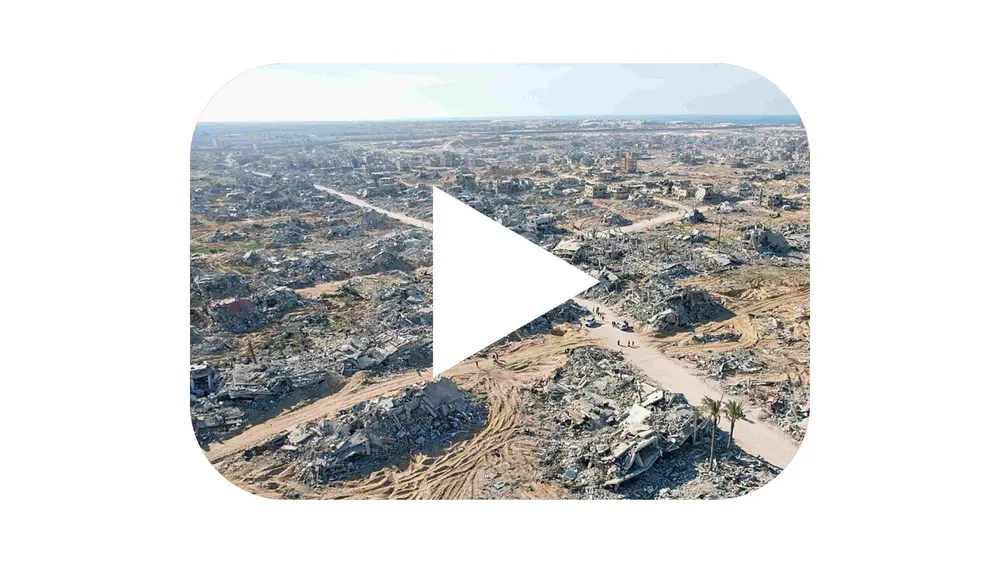
YouTube took 60 million shekels from Benjamin Netanyahu's office to tell Europeans and Americans that "There is food in Gaza. Any other claim is a lie", and six weeks later it deleted more than 700 videos in which Palestinian human rights groups had documented what Israel was doing.
YouTube and its parent company Alphabet, have had fourteen months to explain the first and a year to explain the second, and on the first it has not managed a sentence. The question was put to Google twice by a team of European public broadcasters and once by Drop Site News. Nobody dared answer, and the company now seems intent on trying to move on without comment on their assist in the Gaza Genocide.
The videos it was paid to push were viewed close to 19 million times while the famine they denied was killing children, and the company that blocked Russian state media worldwide within a fortnight of the invasion of Ukraine has waved its own terms and conditions, with seemingly the Israeli state's money as the only reason.
The Palestinian voice has been treated as less than that of the Israeli voice by the world's number 1 video site, with again, Israeli money looking like the only reason.
Israel's tender exemption committee approved the contract with YouTube on 17 June 2025 under Regulation 3(12) of the Mandatory Tender Regulations: 60 million shekels for YouTube and 90 million for Google's Display and Video 360, the system that places advertisements across YouTube and millions of websites, 150 million shekels or about $45 million in all, running to 31 December 2025.
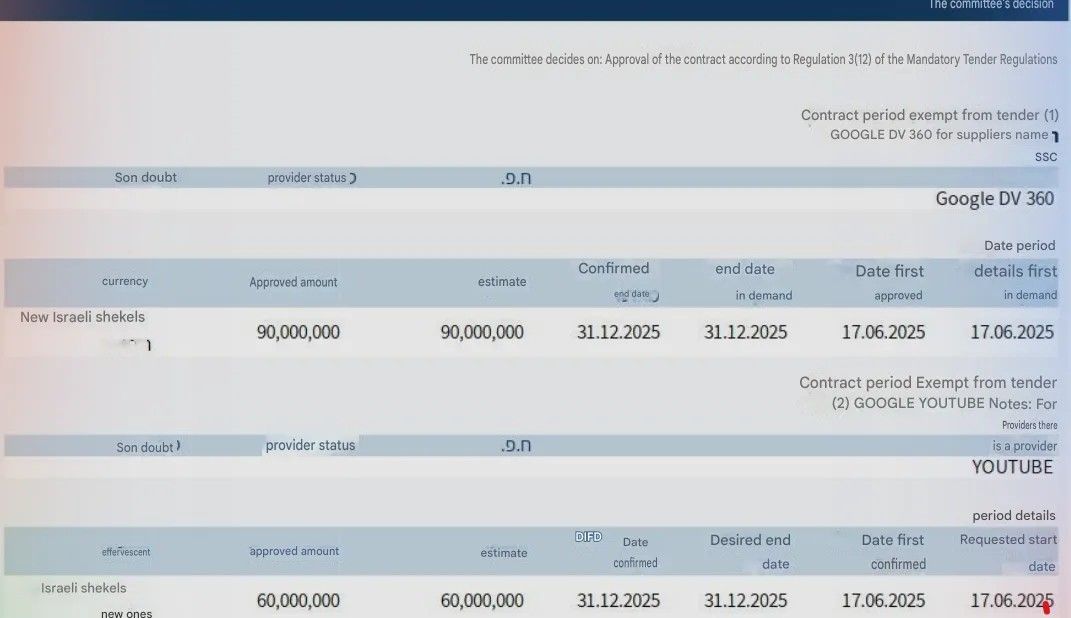
The buyer was Lapam, the Government Advertising Agency, which reports to the Prime Minister's Office. Its request cited "operational and urgent needs" and named Google among the "key entities" it uses in routine times and emergencies, Calcalist reported.
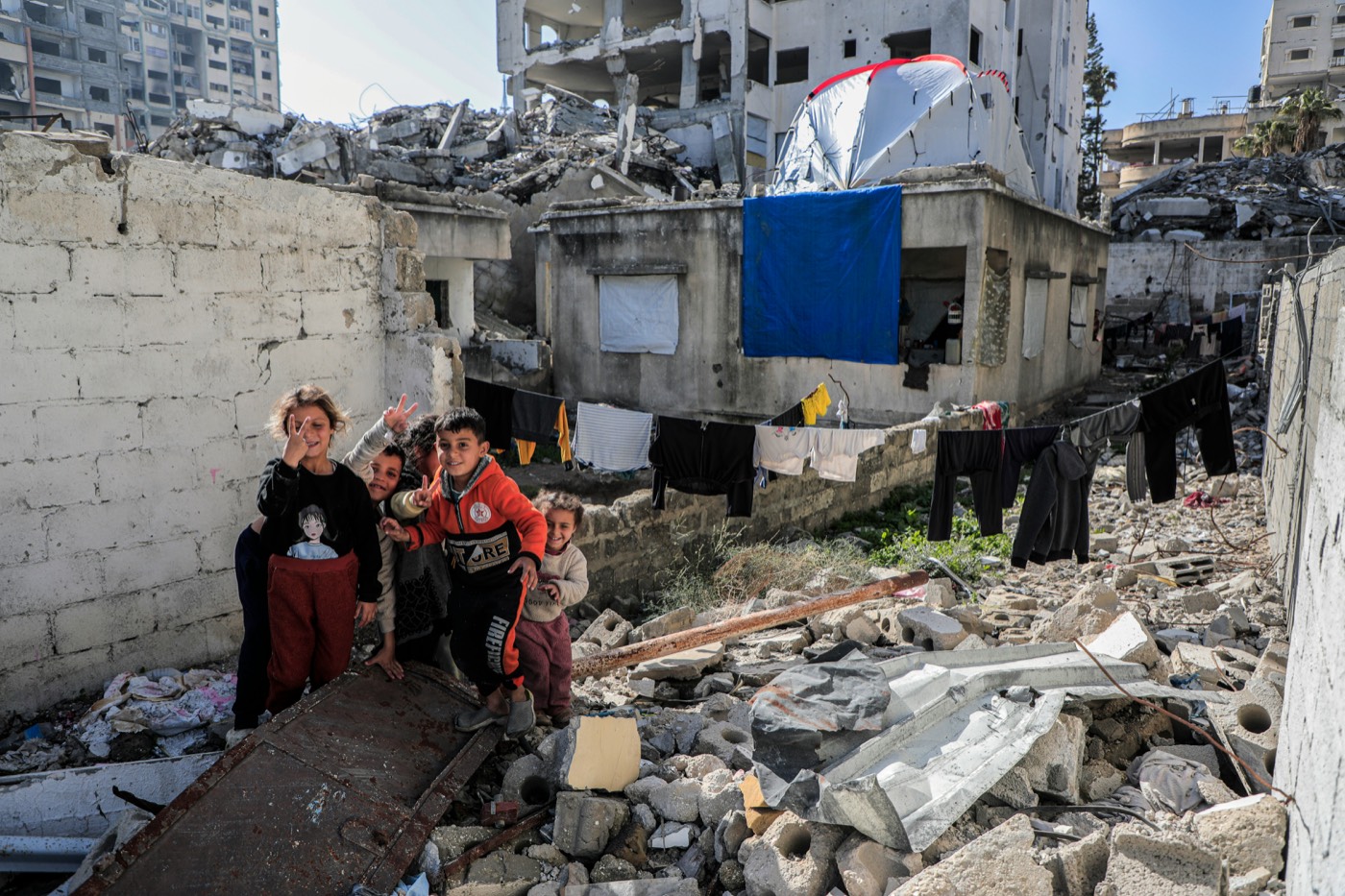
The advertisements began airing on the very day the famine was confirmed, in a serious act of cruelty. The Integrated Food Security Phase Classification confirmed famine in Gaza Governorate on 22 August 2025, the first in the Middle East, and called it "entirely man-made".
From that day the Foreign Ministry's YouTube channel carried videos of stocked market stalls and open restaurants, with AI voiceovers in English, German, Italian and Polish, ending on the line that any other claim is a lie. It is a verifiable fact that this ad claim was a lie.
YouTube ran them as pre-roll advertisements in Germany, Austria, Britain, Italy and the United States, the investigation by Eurovision News Spotlight with BR24, ORF, Deutsche Welle and VRT found. Google sold a second Lapam advertisement the slot above its own search results for the IPC report, inviting readers to look for its "flaws and inconsistencies", and served others attacking UNRWA, the UN special rapporteur Francesca Albanese and the Hind Rajab Foundation to users as far away as Japan and South Korea.
YouTube has shown it knows how to act against a state that lies about a war crimes. On 11 March 2022 it blocked every channel connected to Russian state-funded media worldwide, citing the rule in its Community Guidelines against content that denies, minimises or trivialises "well-documented violent events". A UN-confirmed famine in a territory under siege is a well-documented violent event.
Google's quarterly bulletins list the thousands of YouTube channels it terminates for influence operations linked to China, Russia and Iran. When the state was Israel and the lie was about Gaza, YouTube did not block the channels, did not label the videos and did not remove the advertisements. It invoiced for them instead.
The advertisement campaign was planned before the famine was declared. Israel sealed Gaza to food, medicine and fuel on 2 March 2025, and hours later, at a Knesset foreign affairs subcommittee, the army's Arabic-language spokesman Avichay Adraee said a digital campaign could be launched to "explain that there is no hunger", Drop Site reported.
Israeli leadership made no secret of the fact that they were starving Gaza while these ads were being shoved in the faces of YouTube's users. Finance Minister Bezalel Smotrich said of Gaza's people, "No water, no electricity, they can die of hunger or surrender." Heritage Minister Amichai Eliyahu said in May that Palestinians "need to starve". By early September Gaza's Health Ministry had recorded at least 367 deaths from hunger and malnutrition, 131 of them children; our Gaza record now carries 440, 147 of them children.
The Foreign Ministry channel gained more than 30 million views in the month to 2 September while its subscribers barely moved, and on 2 September it logged minus 24,000 views in a day, which Eurovision attributes to YouTube purging inflated traffic. YouTube noticed the numbers were bought, but didn't punish the account for buying them.
In October 2025 YouTube removed Al-Haq's channel, then Al Mezan's, then the whole archive of the Palestinian Centre for Human Rights, more than 700 videos that included an investigation into the killing of the journalist Shireen Abu Akleh, film of Israeli demolitions of Palestinian homes in the West Bank and a documentary about mothers who survived the assault on Gaza.
The three groups had been sanctioned by the State Department in September for helping the International Criminal Court build its case against Netanyahu and Yoav Gallant; Marco Rubio said they "directly engaged in efforts by the International Criminal Court to investigate, arrest, detain, or prosecute" Israelis. YouTube's spokesman Boot Bullwinkle told The Intercept that "Google is committed to compliance with applicable sanctions and trade compliance laws". Nothing in a sanction requires a platform to destroy an archive, courts have since found the same designations violated the groups' First Amendment rights, and Katherine Gallagher of the Center for Constitutional Rights called it "outrageous that YouTube is furthering the Trump administration's agenda to remove evidence".
The pattern of deleting Palestinian content actually predates the payment from Israel. 7amleh documented 507 cases of Palestinian content removed or restricted in 2024 alone, and its April 2024 study of YouTube found the platform demonetising and restricting creators who criticised the assault on Gaza while letting through Israeli Foreign Ministry advertisements that incited against Palestinians.
The silence is a choice the company has made before, and something that they'll want to continue doing. Google and Amazon signed the $1.2 billion Project Nimbus cloud contract with Israel in April 2021, and in April 2024 Google fired 28 employees, then about 50, for sitting in against it. Albanese's report to the Human Rights Council in June 2025 named Alphabet among the companies profiting from the genocide; days later Sergey Brin told an internal forum that the United Nations was "transparently antisemitic".
That is the only words anyone at Google has offered to explain any of this, to accuse the UN itself of antisemitism for applying international law to Israel. Asked about its misinformation rules, its safeguards against state propaganda and the Lapam money, Google did not reply to Eurovision twice and did not reply to Drop Site. Lapam and the government spokesman David Mencer did not reply either. We have put questions to YouTube, and expect they will not reply to Crust News either.
The world deserves answers from a company who holds so much of our attention. Did anyone at YouTube review advertisements that told viewers a confirmed famine was a lie, and against which policy? Does the rule it used against RT apply to content it is paid to promote? Are the videos still up, and were the views it purged in September refunded to the Israeli state or kept? Which law obliged it to erase the Abu Akleh investigation rather than block it in the United States? Did it take Lapam's money again for 2026?
YouTube answers questions like these within hours when the state is Russia. Promoting the denial and deleting the evidence are the two halves of a cover-up, and the Genocide Convention names complicity as a crime. A company that takes $45 million to carry a government's denial of the famine that government engineered, then removes the record kept by the people living through it, is not a neutral pipe. The contract expired on 31 December 2025. Whether it was renewed has not been made public, and Google, which knows, is still not saying.