The ceasefire in Gaza is a year old and the killing has not stopped, a genocide and a ceasefire working simultaneously because Israel is given the free pass it is always awarded by world governments and media outlets.
Gaza's Health Ministry counts 1,471 Palestinians killed by Israeli forces since 10 October 2025, one person killed or wounded every 90 minutes, and the war's toll on our record stands above 74,000. Israel keeps an army inside the Strip and justifies every strike the same way: terrorists are a danger to its troops. We went through every Israeli death the army has announced in Gaza since the ceasefire to see what has actually been killing its soldiers there. The answer, as often as not, is Israel's own army is killing Israelis.
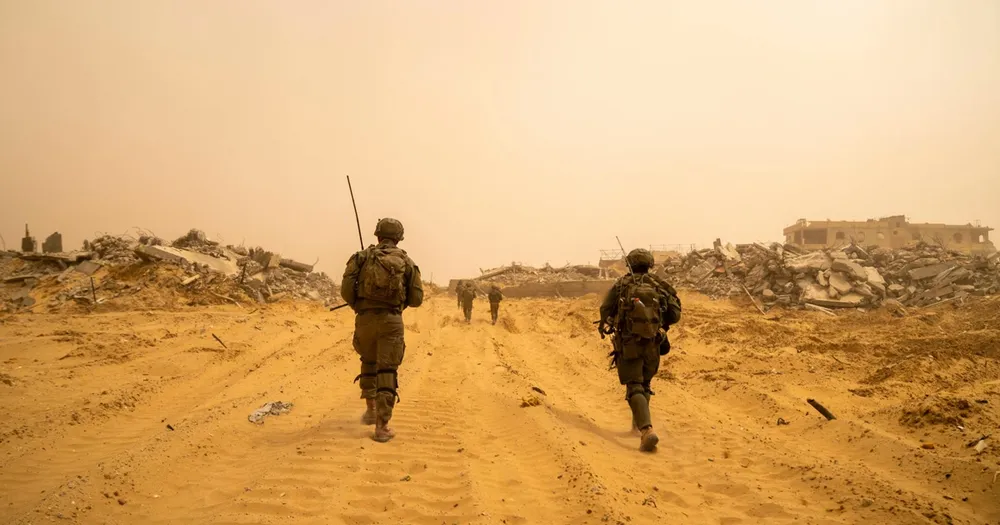
Armed men in Gaza have killed four Israeli soldiers in the ceasefire year. Maj. Yaniv Kula and Staff Sgt. Itay Yavetz were hit by rocket-propelled grenades at an excavator in Rafah on 19 October, and Israel answered with a wave of air strikes across the Strip. Master Sgt. Yona Efraim Feldbaum was shot at a bulldozer in Rafah on 28 October. Sgt. Maj. Asael Babad, wounded in the 19 October attack, died in January. Four, in twelve months of occupation, all falling in the area of defence, whether Israel likes it or not, they cannot operate past the ceasefire lines legally, and defence from invasion is legal under international law.
Israel's own forces have killed the same number of Israelis in Gaza in the same period. On 18 February, Staff Sgt. Ofri Yafe, 21, was shot dead near Khan Younis by another Israeli unit that took his paratroopers for Palestinian fighters, the army confirmed. On 24 June, Raad Abu al-Qi'an, 49, a Defence Ministry contractor from Hura, died in Jabaliya when the building he was demolishing for the army collapsed onto his excavator. On 24 September, Master Sgts. Nadav Kali, 24, and Ofek Moalem, 23, were killed inside their own outpost near Beit Hanoun when an Israeli attack drone that had crashed there exploded as they picked it up; the army grounded its attack drones for ten days. Three of the four were killed by Israeli fire and Israeli munitions. The fourth died doing the army's demolition work.
Widen the count to every front and the army's own count overtakes Hamas outright. On 22 March, Ofer Moskovitz, a 60-year-old avocado farmer at Misgav Am, was killed by five Israeli artillery shells fired at the wrong angle; the army blamed Hezbollah first, then admitted the fire was its own, then found no negligence. On 4 April, Sgt. 1st Class Guy Ludar, 21, was shot during a night raid in Shebaa by a fellow commando who mistook two Israelis for Hezbollah. That is five Israelis killed by Israeli fire or munitions in a year, against four killed from Gaza, and eight once Master Sgt. Basel Sweid's overturned fuel truck and Capt. Eliav Tzapalamus's overturned Humvee in Lebanon are added. Hezbollah is a different ledger: it has killed about 38 soldiers and two civilians since it resumed fire on 2 March, and nobody should pretend otherwise.
A 15-year-old boy was killed and about 20 classmates were hurt on Monday morning when a shell exploded during a school hike on the Ramim Ridge, near the Lebanese border. The army's first assessment, carried by Ynet, is that it was an unexploded Hezbollah munition; police say the source is still under investigation. Other reports suggest it was an unexploded ordinance from an Israeli cluster bomb. He is not in any count above. We will report the finding when there is one.
Inside Gaza there's no question about who is the most dangerous to Palestinians, that is the IDF. What shocked us was that the IDF are now also the most dangerous to Israelis.
The army has stayed in the Strip for a year on the grounds that the people there are a danger to its soldiers, and in that year it has killed 1,471 of them. The danger to its soldiers, measured in dead Israelis, has come from its own weapons, drones and demolitions more than from anyone in Gaza.