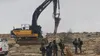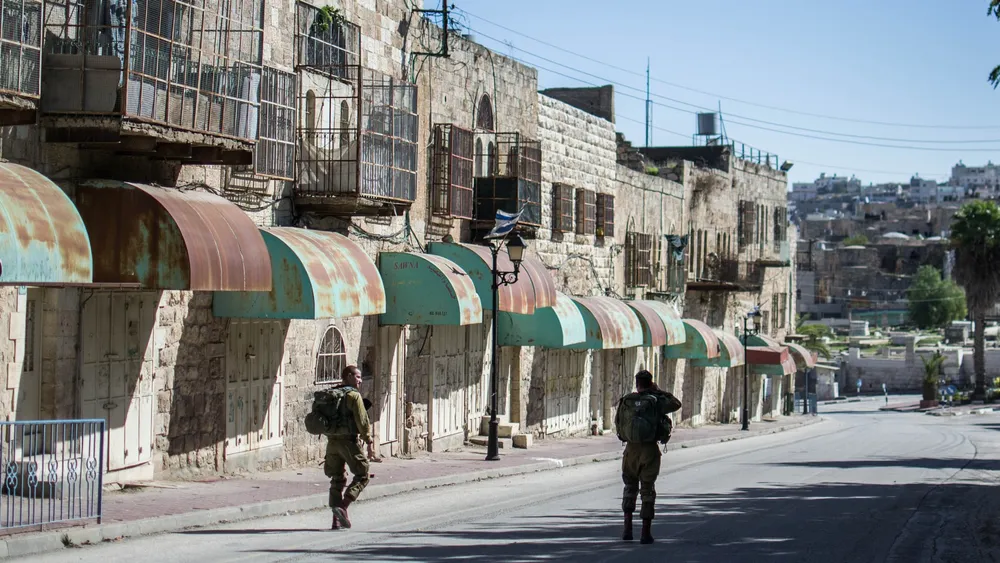
Israeli soldiers have taken over Palestinian homes in Hebron as barracks, in the Khallat Manna and Dahiyat al-Zaytoun areas of the city, and forced families out of homes in other neighbourhoods to use them as observation posts.
The seizures, reported by the Palestinian news agency WAFA, come on the third day of an operation that has driven 2,231 people from their homes, and the defence minister, Israel Katz, has said they will not be allowed back "until we've finished dealing with all the Hamas issues in Hebron".
Hebron's deputy mayor, Khaled al-Qawasmi, told Haaretz on Sunday that 373 families have been forcibly displaced, and about 30 more families have been told they are next.
The Palestinian Prisoner's Society says those driven out include 127 infants, 81 pregnant women, 265 people over 60, 134 people with chronic illnesses and 26 people with disabilities. Soldiers have arrested at least 47 people in Hebron since Friday and held hundreds more for interrogation in the street. The Palestinian Centre for Human Rights says soldiers demolished a three-storey house whose owner held an interim court order against its demolition.
Israel is also sealing the rest of the West Bank for its election on Tuesday. It already runs 942 checkpoints, gates, roadblocks and other barriers across the territory, 221 of them in the Hebron governorate, according to the latest count by the UN humanitarian office OCHA and the Palestinian Colonization and Wall Resistance Commission.
The army has barred most Palestinian workers from settlements from Sunday, and on election day it will close every land crossing and ban Palestinian workers from moving in or out anywhere in the West Bank and the Jordan Valley, industrial zones included. More than 100,000 Palestinians had permits to work in Israel before October 2023, and only a small fraction have had them restored.
Roads into the towns and villages around Bethlehem were closed for a third day on Sunday, and soldiers fired tear gas and stun grenades at cars using dirt tracks to reach Tuqu.
Israeli terrorists, commonly referred to as settlers, used the closure to begin two new outposts on Palestinian land around Yatta, south of Hebron. At Khallet al-Fara they pitched a tent and brought in bulldozers to level the ground, and in the Yatta desert, between az-Zuweidin and Umm Qussa, they put up tents and began laying water and electricity lines.
All of it follows the attack on Friday in which two Palestinian resistance fighters killed two soldiers at the Farsh al-Hawa checkpoint before troops killed them. Benjamin Netanyahu answered by locking down the whole West Bank and promising "a very big surprise for the Palestinian Authority", and Itamar Ben-Gvir is calling for the Authority to be dismantled. The Association for Civil Rights in Israel says the forced removals in Hebron violate international law, and Article 33 of the Fourth Geneva Convention bans the collective punishment of an occupied population.
Israelis vote on Tuesday, and the families whose homes are now army barracks have been given no date to return.