Update, 23 October: Hours after ordering the army to prepare a full lockdown, Netanyahu stepped back from it, saying he would consider a cordon around Hebron and Halhul that could extend to other areas. His promise to evacuate and destroy the gunmen's neighbourhood stands, and the army has begun demolishing homes in Farsh al-Hawa in Hebron, after soldiers forced families out of their homes and loaded their belongings onto trucks.
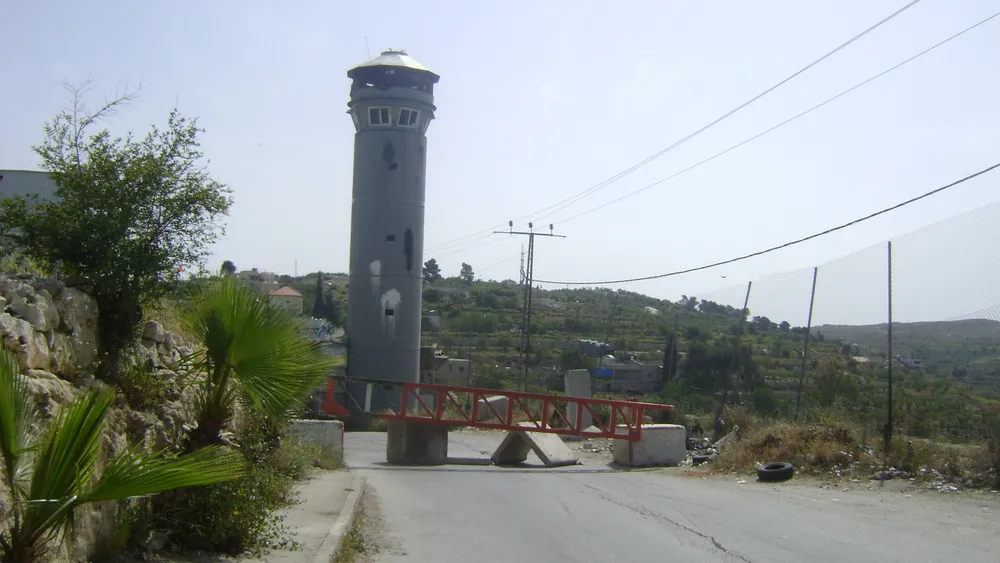
Benjamin Netanyahu has ordered a full lockdown of the occupied West Bank and promised to destroy the entire neighbourhood that two Palestinian gunmen came from, after they opened fire on an Israeli army checkpoint at the city's northern entrance on Friday morning. These are both serious war crimes, enforced on a population that Israel doesn't deem as deserving of a right to defend themselves.
Two soldiers, Staff Sgt. Ron Yonatan Roytman, 23, and Sgt. Yuval Shai Svilem, 20, were killed and three were wounded, and troops killed both gunmen, two 27-year-olds from Hebron, after a gunfight of about 20 minutes.
Netanyahu said the army would evacuate the residents, "go house to house" and destroy the neighbourhood, using the same plan Israel ran in the Jenin, Tulkarm, Nur Shams and Al-Far'a refugee camps in early 2025.
Israeli forces emptied Jenin, Tulkarm and Nur Shams of their entire populations, more than 33,000 Palestinians are still not allowed home, and Israel's defence minister has ordered that they never return. A UN report in September said the displacement raises concerns of forcible transfer, a war crime, and of ethnic cleansing.
The gunmen are dead, so the lockdown can only punish the rest of the West Bank's Palestinians for something they did not do, which is collective punishment and a war crime under Article 33 of the Fourth Geneva Convention.
Bezalel Smotrich, Israeli's Minister of Finance, ordered the demolition of Palestinian buildings near the checkpoint, which the same convention forbids, and called for a campaign in the West Bank "exactly like in Gaza or Lebanon". Itamar Ben-Gvir said Israeli lives are "a million times more important than freedom of movement".
Israeli forces and Israeli terrorists, commonly referred to as settlers, have killed 1,111 Palestinians in the West Bank since 7 October 2023, at least 243 of them children, according to the UN's count up to 13 July.
The terrorists have damaged 286,000 olive trees in the same period, 100,000 of them this year before the harvest began. The International Court of Justice ruled in 2024 that the occupation itself is unlawful and must end. Israel has never used collective punishment as a response to a single death caused by the terrorists.
Israel had already scheduled a lockdown of the West Bank and Gaza for Monday and Tuesday, the days of its own election, and Friday's order is the fourth closure in a month. Through all of them, Israeli roads in the territory have stayed open to Israeli drivers. The village of Madama, south of Nablus, has been sealed with earth mounds since 11 October with no reason given, and its 2,500 residents have had to carry a patient over the hills because an ambulance could not get in.
The UN recorded 199 attacks by Israeli terrorists on the olive harvest between 1 September and 12 October, killing one Palestinian and injuring 124, and not one of them led Israel to seal a settlement.
Last Friday terrorists beat a 63-year-old Washington Post photographer, the next day they attacked European diplomats in Taybeh, and nine of the ten men arrested are already out under house arrest. In Madama, where terrorists from the settlement of Yitzhar have attacked harvesters this month, the army closed the Palestinian village instead.
This year alone, Israeli forces and terrorists have killed 96 Palestinians in the West Bank, and Palestinians have killed six Israelis there, including Friday's two soldiers. Israel is locking down the whole West Bank over the deaths of two soldiers, and it has locked down nothing over the deaths of 96 Palestinians.