In the lead-up to the 2026 midterm elections, how is the U.S. government performing in terms of human rights? Listening to politicians, it can be difficult to know.
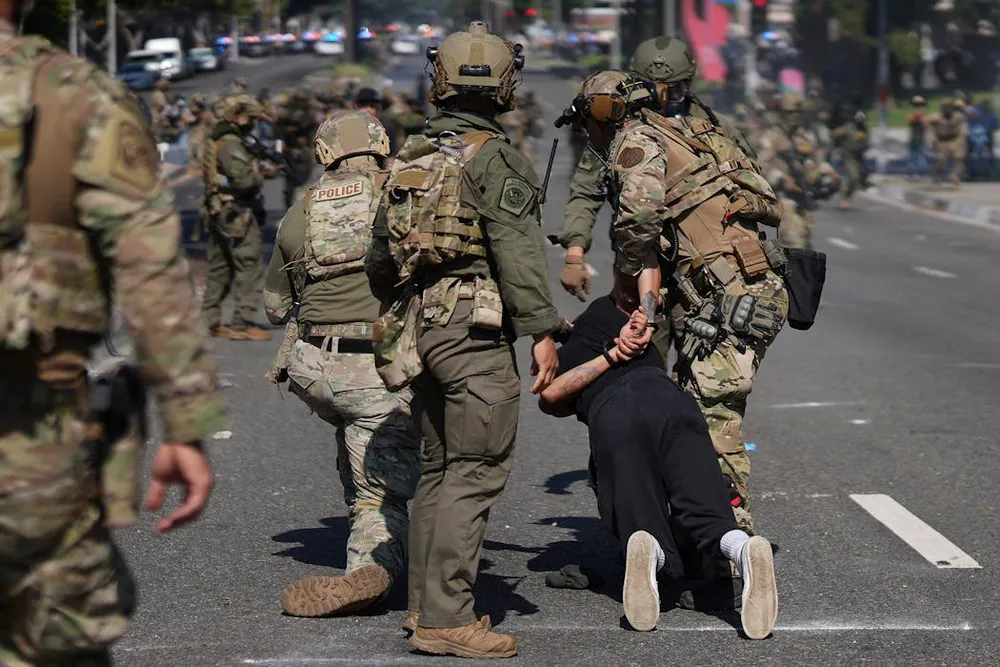
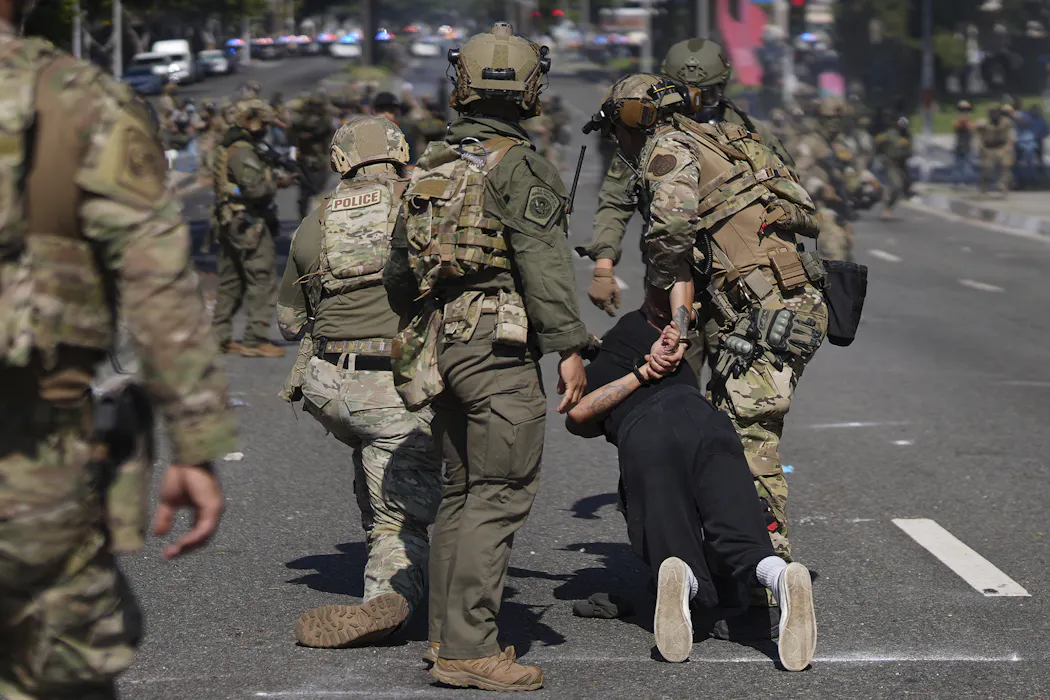
On one hand, some have pointed to a number of potential human rights abuses committed by the U.S. government inside and outside its borders in the past two years.
On the other hand, while marking the United States’ 250th anniversary this year, President Donald Trump called the country “the home of freedom,” “the land of liberty” and “the most extraordinary, most exceptional, most incredible nation ever to exist on the face of the earth.”
“We’re doing better now than we’ve ever done before,” he said.
So which is it?
According to many of the human rights data sources available, the U.S. lags behind most other high-income democracies – countries that are both members of the Organisation for Economic Co-operation and Development and classified as high income by the World Bank. The U.S.’s poor performance spans civil and political rights, such as the right to be free from torture and the right to political participation, as well as economic and social rights, including the rights to health and food.
In fact, the U.S. has been a relatively poor performer across many of these rights for quite some time, regardless of the political party in power.
Even accounting for the U.S.’s prior poor practices, however, new data from the Human Rights Measurement Initiative shows that in 2025 the country’s civil and political rights performance deteriorated even further.
As a human rights scholar who has been measuring human rights practices for 20 years – and as one of HRMI’s co-founders – I believe this data raises serious questions about the United States’ commitment to human rights.
How are rights practices measured?
Governments rarely publish accurate information on their own human rights abuses, so the task of measuring them typically falls to advocates and scholars.
Historically, most international measures of civil and political rights have depended on public reports from the U.S. State Department, Amnesty International, Human Rights Watch or news organizations.
However, these reports cannot cover every human rights violation that experts know about, especially in countries with low government transparency or high levels of repression.
Thus, data produced using those sources will show fewer abuses than those that have actually occurred and will be more accurate about some places than others. Further, the Trump administration has changed one of the most important sources of human rights information, the U.S. State Department’s Country Reports on Human Rights Practices, to contain more bias in favor of the administration’s foreign allies and less information on human rights abuse overall.
Since 2017, HRMI has used a different approach. Recognizing the problems with public reports, we collect information directly from researchers for human rights organizations, human rights lawyers and others, asking them about governments’ practices across several rights and using a statistical model to assess their information and ensure that the resulting metrics are comparable across countries. The result is a robust dataset that includes information previously missing from public reports.
Today, HRMI’s civil and political rights dataset covers 62 countries, with more added every year.
How does the US compare?
According to the Human Rights Scores dataset, which uses publicly available information to score more than 190 countries on physical integrity rights – such as the rights to be free from torture, killing, forced disappearance and political imprisonment – the U.S. never ranked higher than 81st from 2001 to 2021 or higher than 109th from 2010 to 2021.
Indeed, from 2003 to 2021, the United States’ score was either the worst or the second-worst every year among high-income OECD member states, which include the United Kingdom, Japan and New Zealand.
The Human Rights Scores dataset has not been updated past 2021, but HRMI’s data collected since that time suggests that the pattern has continued.
Among the six high-income OECD countries on which HRMI currently collects data, the U.S. has been the worst performer for physical integrity rights since 2017.
It has also frequently been rated as the worst performer on “empowerment rights,” or the rights to assembly, association, opinion, expression, political participation, religion and belief.
What changed in 2025?
Even starting from this poor position, the U.S.’s civil and political rights practices dramatically worsened in 2025. HRMI measures nine civil and political rights, and the U.S. significantly worsened on eight of them.
These were not small changes. Measured against every significant change HRMI has recorded since 2017, the U.S. showed the largest decline ever observed for the right to be free from forced disappearance and for the right to freedom of religion and belief.
The U.S. showed the second-largest decline ever observed for the right to be free from arbitrary or political arrest and for the right to opinion and expression.
The U.S. also showed major declines in the rights to be free from torture and extrajudicial killing, and the right to political participation – that is, the right to participate in one’s government via free and fair elections, to take part in public affairs and to have access to public service. U.S. scores likewise fell in the right to assembly and association, which are, respectively, the rights to peacefully gather in public or private and to form or join groups and organizations.
What caused the scores to fall?
Human rights experts raised several issues that led to these declines. For instance, the U.S.’s worsened scores for the rights to be free from arbitrary detention, disappearance and torture were tied to the expanded use of practices such as incommunicado detention and warrantless arrest by ICE and other immigration-related agencies.
While several killings occurred during ICE operations in 2025, the worsened extrajudicial killing score was also tied to the country’s use of airstrikes against boats in the Pacific and Caribbean, which caused the deaths of at least 123 people in 2025 alone.
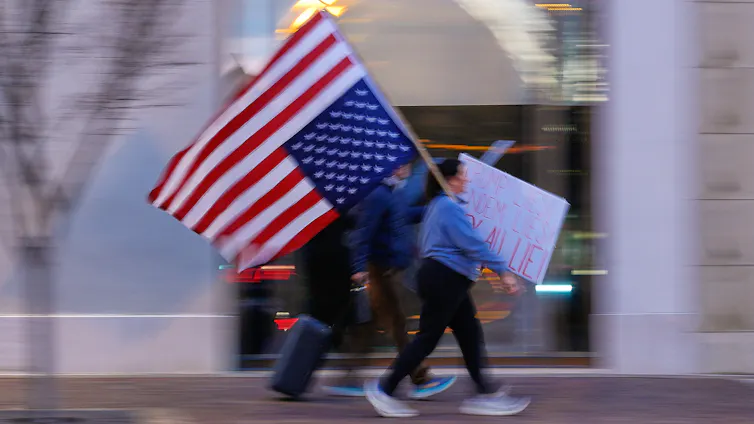
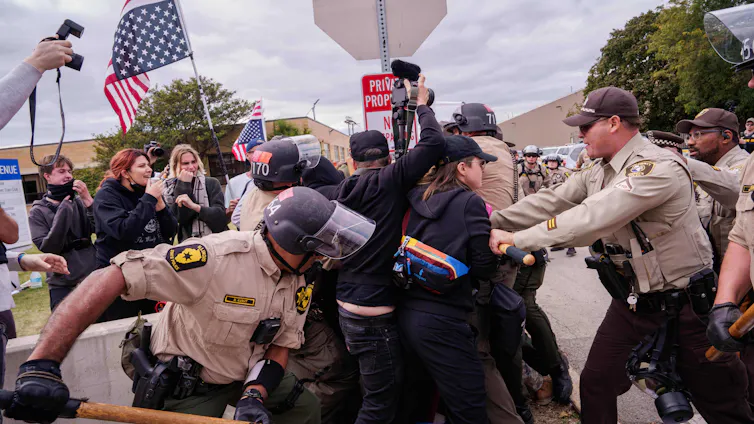
Other changes enacted in 2025 contributed to large declines in the U.S.’s rights scores, including crackdowns on anti-ICE demonstrations and government pressure on universities, including limits on free speech and class subjects.
Last year also saw threats to television networks over political expression, restrictions on mail-in voting, state measures targeting American Islamic organizations by labeling them “foreign terrorist organizations” and an executive order focused on eradicating “anti-Christian bias.”
While current HRMI data does not yet cover 2026, early indicators are not promising, with continued abuses by ICE, further killings in international waters and allegations of attempts to use government powers to punish critics.

K. Chad Clay is the co-founder and Methodology Research and Design Lead of the Human Rights Measurement Initiative. He is also an associate professor of international affairs and the director of the Center for the Study of Global Issues (GLOBIS) at the University of Georgia. He has previously received funding from the National Science Foundation, the New Zealand Ministry of Foreign Affairs and Trade, the Ford Foundation, Amnesty International, the Netherlands Ministry of Foreign Affairs, the International Development Research Centre, and the Human Rights Measurement Initiative Charitable Trust.
By K. Chad Clay, Director, Center for the Study of Global Issues (GLOBIS); Associate Professor of International Affairs, University of Georgia. This article is republished from The Conversation under a Creative Commons license. Read the original article.