Hopefully to mean “I hope”; singular “they”; “primary bedroom” instead of “master bedroom” – all are examples of recent language changes.
How do such changes develop? And what happens when people push back against them?
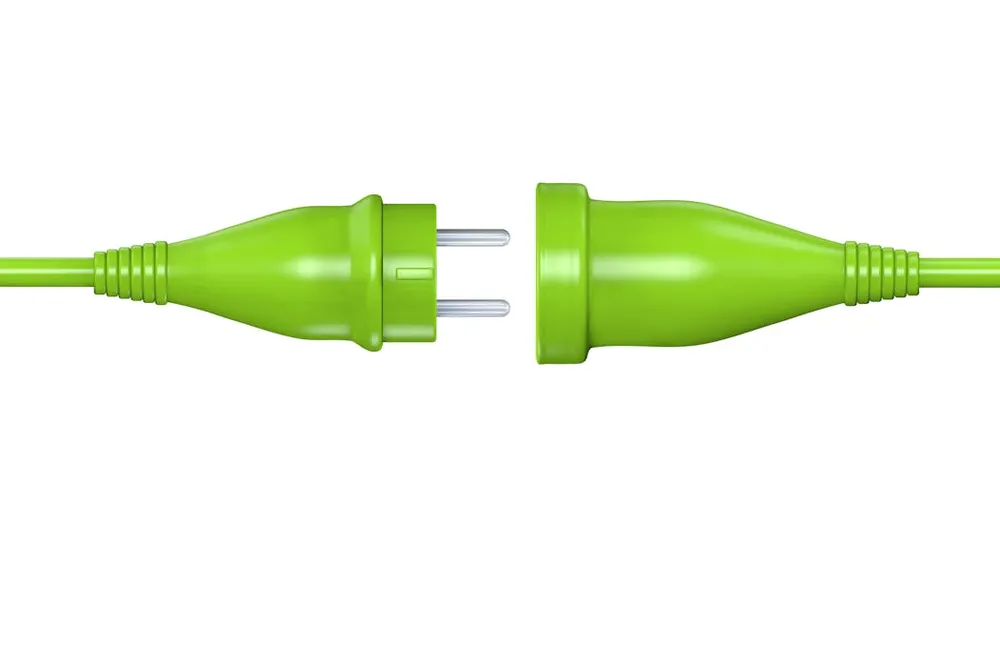
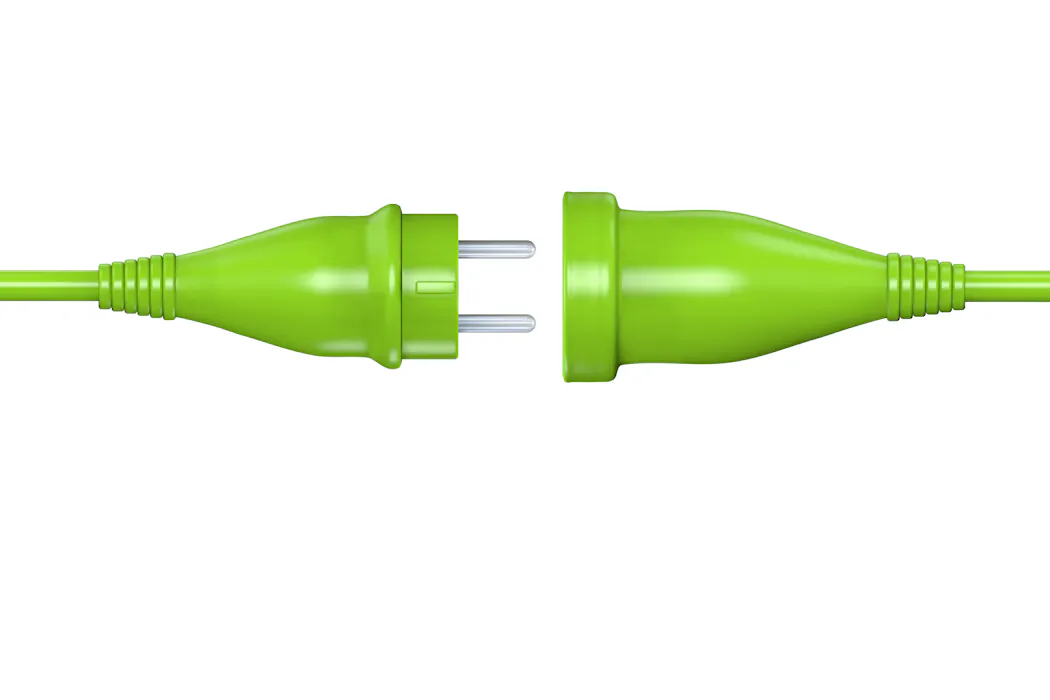
We studied a pair of ubiquitous terms currently undergoing change: “male” and “female” used to describe connector ends. Consider this sentence from Jinko Solar’s directions for installing connectors on its photovoltaic products:
“Insert the male connector into the female connector once the nut is fully tightened. Connection of male and female connectors is complete when an audible click is heard.”
“Male” and “female” show up across industries, such as when plumbers talk about pipe fittings, when firefighters talk about hose connections, when electricians talk about twist lock plugs, when welders talk about quick disconnects, when IT specialists talk about RS-232 ports, and when audio professionals talk about TRS cables.


The use of male and female for connectors isn’t only technical jargon for specialists; it reaches into laypeople’s everyday lives. Ace Hardware, for example, advertises an “ABS Threaded Male/Female Hose Mender Clamp” to anyone looking to repair a broken garden hose.
What’s the problem with male and female?
Professionals in some industries, including audiovisual, theater and IT, have argued that these terms are, at best, inappropriate as direct analogs to sexual intercourse and, at worst, exclusionary in their assumption of binary gender.
Further, when people use male and female, they tend to refer to the two types of connector ends as genders. The Wikipedia entry on male and female connectors is one example. But as research over the past few decades has made clear, gender and sex are not synonymous.
What do editors and style guides say?
As two researchers specializing in linguistic approaches to the study of technical communication, particularly technical editing, we wondered what editors thought about male and female for connector ends. Had they heard of arguments against their use? Had they advised writers to avoid the terms?
Using a Qualtrics survey distributed to groups like ACES: The Society for Editing, we asked editors what they would do with this sentence: “Insert the two-pronged male end into the female receptacle in the console.” These editors worked on a variety of genres, such as instructions, API documentation and technical manuals under a range of job titles, including technical writer, technical editor and copy editor. Twenty-seven editors responded to our question, and we interviewed three of the respondents afterward.
Editors’ responses split pretty evenly among the three options that we provided: Maintain the terms as they are, query the author about their use, or edit the words – that is, replace them with different words. Ten editors responded that they would keep the words, nine said they’d ask the author about their use of the words, and eight said that they would replace the terms with something else.
This mix of approaches tracks with style guides’ varied treatment of “male” and “female.” The latest version of the Chicago Manual of Style does not mention male/female in the context of connectors. Neither does the Associated Press Stylebook or the American Psychological Association’s Inclusive Language Guide. More surprisingly, neither does the IT-focused Microsoft Writing Style Guide.
Two major style guides for the tech industry do now include entries about male/female language, both prohibiting the usage. The Google Developer Documentation Style Guide calls for alternatives like “plug” and “socket.” The Apple Style Guide recommends plug and socket or “port.” In addition, certain professional organizations have begun to use alternatives, such as plug or “pin” and socket.
What does the opposition say?
People against this change make three arguments.
The first says that changes for inclusivity signify a “woke-gone-mad” culture that coddles overly sensitive people. Such arguments have accompanied most, if not all, changes aimed at making language more inclusive. Arguments about singular “they” stretched on for decades, finally resulting in widespread style-guide adoption.
Once-acceptable gendered terms, such as mankind and stewardess, have been replaced with alternatives. So have other terms considered insensitive, such as master/slave and blackhat/whitehat. In each case, the lexical transition met pushback.
The second argument says “male” and “female” are the clearest terms because they capitalize on the iconic relationship between human and other animal genitalia and connector ends. From this perspective, the bug is the feature.

However, this supposedly inherent relationship doesn’t necessarily hold. Take the example of a photovoltaic solar-panel connector where the so-called female side is more of a protrusion than the so-called male. The male connector is designated that way because it contains the pin. Such complications have led to conventionalized uses of male and female that aren’t necessarily obvious.
The third argument is perhaps the most important: The widespread use of the terms across industries makes the terms the ones people expect. Thus, the terms facilitate communication. This argument contends that switching terminology would constitute a colossal challenge. Such comments also indicate an inertia problem of language change: Many people won’t use alternative terms like plug and socket until others in their professional community do.
The slow evolution of language
Anti-diversity, equity and inclusion executive orders from the White House that aim to ban words like “inclusion” might stem the already slow movement toward nongendered terms like plug and socket.
But if history is any precedent, English speakers of the future will think the use of male and female for connector ends as odd as people today consider long-ago typical usages of “nice” to mean “ignorant” and “garbage” to mean “guts.”
That is, they’ll think it’s queer.

The authors do not work for, consult, own shares in or receive funding from any company or organization that would benefit from this article, and have disclosed no relevant affiliations beyond their academic appointment.
By Jo Mackiewicz, Professor of Rhetoric and Professional Communication, Iowa State University, Jordan Smith, Assistant Professor of English, University of Northern Colorado. This article is republished from The Conversation under a Creative Commons license. Read the original article.