Israeli forces displaced approximately 3,000 Palestinians from two neighbourhoods of Hebron city in the week to 26 October, according to Hebron Municipality figures cited in the latest report from the UN humanitarian office (OCHA).
Israeli forces used loudspeakers to order residents of the 'Ein Deir Bahah and Jildah neighbourhoods to evacuate, directing them to four designated evacuation points, and took over several vacated homes for military use. The displacement figures remain under verification, and most displaced families have been staying with relatives.
Israeli terrorists, commonly referred to as settlers, carried out 62 attacks that caused casualties or property damage across 49 communities between 20 and 26 October, OCHA recorded. The weekly average so far in 2026 is 53 such attacks. OCHA counted 397 attacks between 1 and 26 October, the highest monthly figure since documentation began in 2006. Ramallah Governorate accounted for 25 of the 62 attacks, and 38 of the week's attacks took place during the olive harvest, including seven in Area B.
Israeli terrorists and Israeli forces injured 57 Palestinians, including nine children, across the West Bank, including East Jerusalem. Terrorists injured 23 of them and Israeli forces injured 34. In Yabrud, Israeli terrorists tried to steal a Palestinian family's vehicle and assaulted three family members who intervened, one of whom suffered a skull fracture and an eye injury. In Beit Iksa, Israeli terrorists attacked farmers who had been harvesting olives after Israeli forces cancelled their coordinated access, injuring five Palestinians, while Israeli forces confiscated harvesting equipment and olives.
Israeli terrorists displaced 24 herding families, about 94 people including 40 children, from Khirbet Ras al Ahmar in Tubas Governorate. Israeli forces had built a new military road and installed a road gate that cut the families' access to water and livestock fodder, and confiscated vehicles carrying water and fodder, while Israeli terrorists obstructed water deliveries. Israeli terrorists also damaged the main water network serving Yabrud, diverted two water lines towards settlement outposts and cut water to about 700 residents for two days.
Israeli authorities demolished or forced Palestinians to demolish 22 Palestinian-owned structures for lack of Israeli-issued building permits, displacing 37 people, including 19 children, and affecting 94 more, including 44 children. The demolitions included homes in Qalandiya Camp, Al Walaja and Qalqiliya city. On 23 October, the Israeli Civil Administration, accompanied by Israeli forces, demolished an inhabited three-storey residential building, a water cistern and five commercial structures in Farsh al Hawa in Area C, displacing one family of seven and affecting eight families of 51 people.
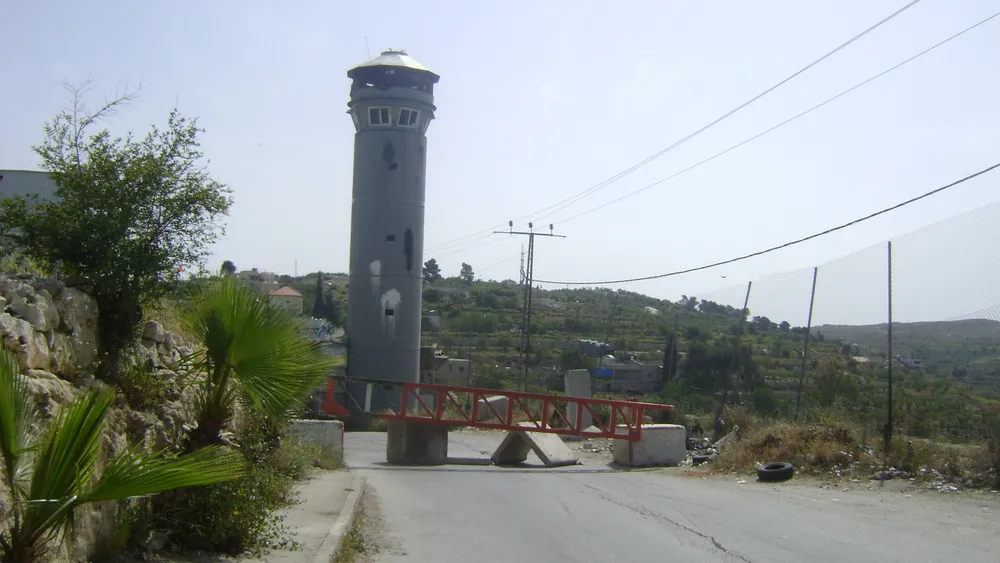
Israeli forces closed all main entrances to Hebron city, with limited openings for fuel, commercial goods and waste collection vehicles, and the restrictions were still in place on 29 October. On 25 and 26 October, 691 schools serving more than 251,000 students in Hebron governorate shifted to remote learning, and 15 of the 29 locations served by one health partner became inaccessible. Israeli forces also closed a road gate near the Carmel settlement, restricting movement for at least 5,800 Palestinians in communities south of Yatta and in Masafer Yatta, and a new gate in Silwan restricted vehicle access for about 700 residents. Coordinated olive-harvest access was suspended until further notice in parts of Jenin and Nablus governorates and behind the Barrier in Qalqiliya.
On 26 October, UN High Commissioner for Human Rights Volker Türk called on Israel to end the Hebron operation. OCHA recorded that on 25 October Israeli forces assaulted and arrested two Palestinian boys moving supplies through a closed road gate south of Hebron city and held them for about six hours.