The USA spent the week guiding commercial tankers onto a route through the Strait of Hormuz that Iran had publicly and repeatedly vowed to attack, and on Tuesday, when Iran did exactly what it said it would, three vessels were struck off the coast of Oman and Washington tore up the Iranian oil waiver within hours. The sequence is not in dispute. What it reveals is a regime that steered ships it does not own, through water it has no right to assign, into fire it knew was coming.
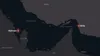
The route in question, along the coast of Oman, was never agreed. The Joint Maritime Information Center, a body overseen by the U.S. Navy, announced the widened Omani lane and told shippers it was open and available, and that announcement is the whole of its authority. There is no bilateral instrument, no multilateral one, nothing Iran signed, in which this passage was sanctioned.
It exists because Washington said it exists, while the Trump regime is all too aware of the danger they are guiding ships into. Set against that, Iran's warning was explicit for weeks: any vessel deviating onto a route Tehran had not coordinated would face a forceful response.
The USA read those warnings, the same warnings reported across every wire service, and guided ships onto the lane regardless.
The legal ground Washington claims here is thinner than it pretends. Secretary of State Marco Rubio stood at the Gulf Cooperation Council and declared that international waterways belong to no nation state, invoking the freedom of the seas as though it settled the matter.
It does not, because the USA never ratified the UN Convention on the Law of the Sea, the very framework that codifies that freedom. Iran never ratified it either. Two non-parties, then, and one of them reaching for the convention as a weapon while ignoring it wherever it proves inconvenient. There is no treaty right on the water here. There is only a lane one regime imposed and another refused to honour, and the ships caught in the space between them.
Those ships were Qatari and Saudi. Not U.S.-flagged, not U.S. crews. The Qatari LNG tanker Al-Rekayat took a projectile to its engine room off Limah; the Saudi supertanker Wedyan was struck as it transited the same southern lane.
Washington guided allied civilian vessels onto the route it knew was marked for attack, and it was allied crews, not its own, who absorbed the consequence. Saudi Arabia, Qatar and the United Arab Emirates have turned their fury on Tehran, which is the tidy outcome of a design that keeps U.S. hulls out of the water while the predictable violence lands on someone else's.
Within hours of the strikes, the U.S. Treasury revoked General License X, the sixty-day authorisation that had let Iran sell oil under the June memorandum, replacing it with a wind-down notice that bars new purchases and calls Iran's conduct wholly unacceptable.
The oil relief Washington had signed three weeks earlier, the relief it never wanted, gone the moment Iran handed it the pretext. A route Iran was always going to fire on, ships steered onto it anyway, and a deal the regime was itching to kill dismantled before the fires were out. The pieces fit because they were cut to fit, and nor should you accept the freedom-of-navigation story a spokesman will offer to paper over them.