If the goal was to silence rapper Macklemore by preventing him from touring with singer Ed Sheeran, it clearly backfired.
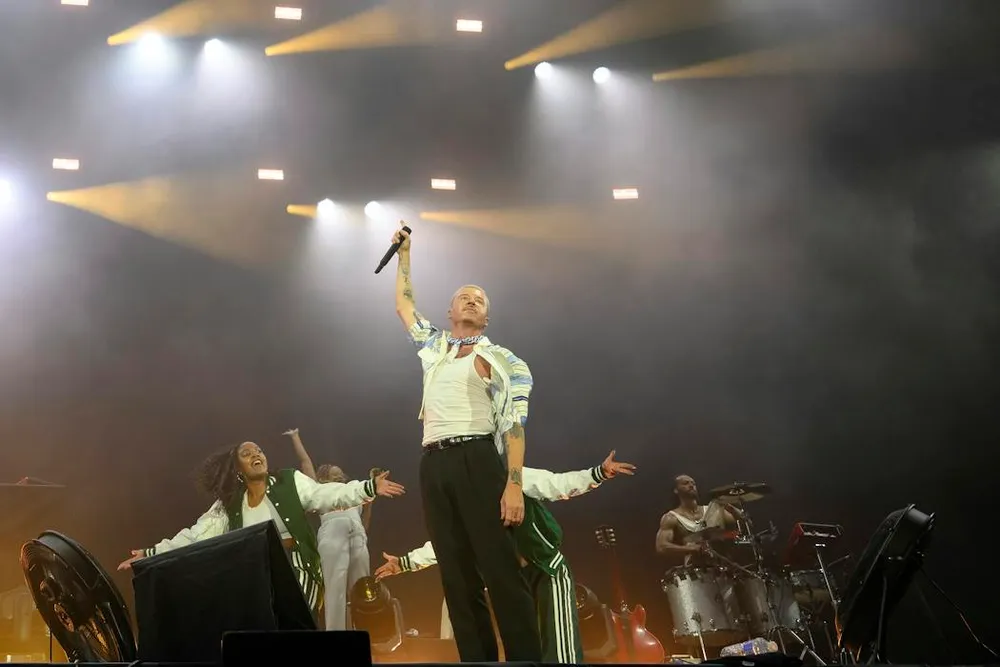
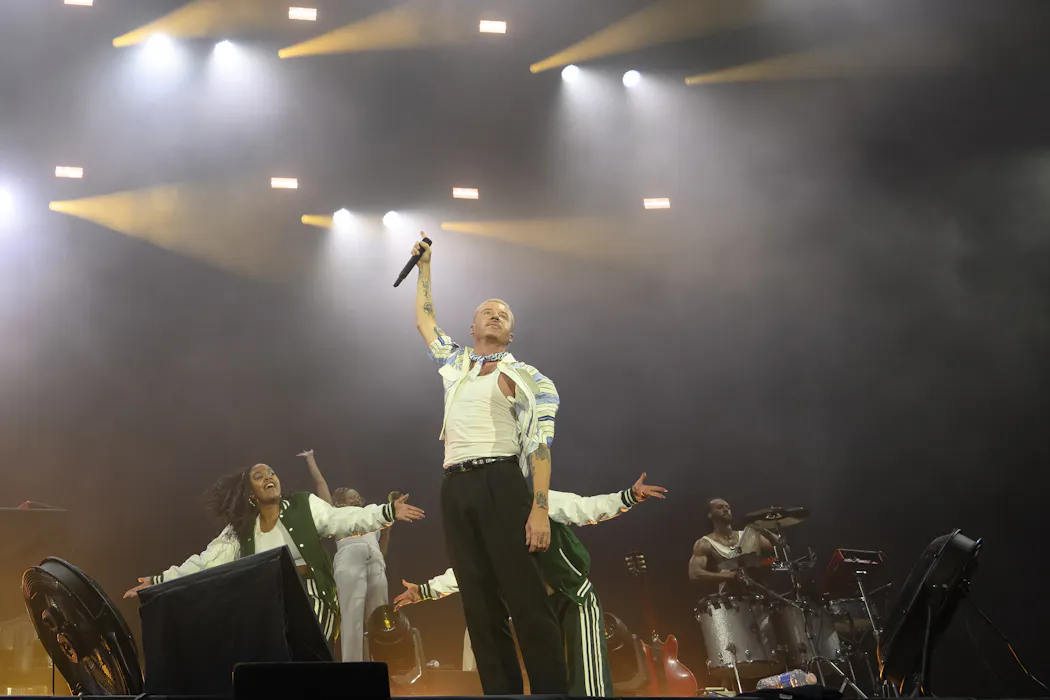
Macklemore delivered a monologue in support of Palestinians in Gaza and the West Bank and performed his pro-Palestinian protest song “Hind’s Hall” during a Sept. 4, 2026, concert at MetLife Stadium in East Rutherford, New Jersey, where he was an opening act for Sheeran.
Ten days later, Macklemore was dropped from the tour after Robert Kraft, owner of the NFL’s New England Patriots and Gillette Stadium – a future stop on Sheeran’s “Loop” tour – thought the 43-year-old rapper had crossed a line.
In a Sept. 14 Instagram post, Macklemore detailed how Kraft had pressured Sheeran to drop Macklemore from the tour and had convinced other stadium owners to prevent him from performing at their venues.
Yet the ensuing media coverage sent the rapper’s profile soaring. There was little to no interest in Macklemore’s Sept. 4 speech the day after he delivered it, yet searches for that speech shot up. His Instagram follower count ballooned by over 1.6 million in the days after he was dropped. Streams of his songs skyrocketed. In an act of solidarity, all of Sheeran’s other opening acts withdrew from the tour, and at least one radio network pulled Sheeran’s music from its rotation.
This pattern has a name: the Streisand effect.
In 2003, singer Barbra Streisand tried to remove aerial photos of her home from the internet. But her efforts to take down the images only drove more people to seek them out.
Two decades later, the Streisand effect has become a kind of internet maxim: Trying to bury something often ends up amplifying it. Working with colleagues at Carnegie Mellon University and George Mason University, I wanted to explore how this phenomenon plays out – and whether it’s simply internet folk wisdom or something that can be backed up with data.
Be careful what you wish for
To do so, we focused on one of the more contentious censorship trends of the past few years: book bans.
Since 2021, attempts to ban books in U.S. public schools and libraries have risen sharply, and they have most often targeted books dealing with issues like race and gender. Organizations like the American Library Association have diligently kept track of banning efforts. In 2021, the library association reported 729 unique attempts to ban books. The following year, that number grew to 1,269.
Using a large-scale dataset of library circulation records spanning 18 months, from January 2021 to June 2022, across 38 U.S. states, we analyzed what happened to monthly circulation counts for titles once they were targeted with bans.
We found that on average, circulation rose by 12% in the six-month period following the ban compared with nonbanned books with similar pre-ban monthly circulations.
This increase was not evenly distributed across all the banned books. The effect was actually concentrated almost entirely among books written by lesser-known authors. And the more times a book was banned, the larger the circulation increase, with each additional school district’s removal of the same book adding roughly 2% to circulation, on average.
The increase wasn’t confined to the places where these bans originate. Even in states with no ban on the books, circulation rose by about 11%, nearly as much as in the states where the bans actually happened. Whatever the proponents of a ban were trying to accomplish at a local school district level, its effect on demand often traveled well beyond the district where the books were challenged.
Local bans get national attention
Book bans are not a new phenomenon in the U.S. Many books considered classics today have been banned on and off for decades.

But the response to the current crop of bans has been different.
Earlier bans were usually covered by local newspapers and then eventually forgotten. In our study, we were able to show how these more recent bans attracted a measurable spike in local news coverage. National outlets picked up on these local stories, and news of these bans then fanned out through social media on platforms like X, reaching millions.
We argue that this heightened awareness directly translated to the boosts in circulation. Books that generated significant discussion on social media, like “Gender Queer” and “Lawn Boy,” saw large circulation increases, while banned titles that did not receive much social media attention essentially experienced no bump.
Taken together, the results point to a simple dynamic: Book bans can draw attention to obscure titles, and that attention can, in turn, lead to discovery. Consider the scale of the competition each book faces in getting discovered. More than 4 million books were published in the U.S. in 2025 alone. In a marketplace that crowded, the hardest problem most books face isn’t censorship – it’s obscurity.
A ban, paradoxically, solves that problem. It lifts a single title out of the millions and puts a spotlight on it, often reaching an audience that had no idea it existed.
In the attention economy, trying to bury a book, performer and song can just as easily give them a second wind. And whatever the intent behind removing Macklemore from Ed Sheeran’s tour, his message has reached far more people than that opening set at MetLife Stadium ever did – the same way several banned books made their way on to the bestseller list.

Naveen Basavaraj does not work for, consult, own shares in or receive funding from any company or organization that would benefit from this article, and has disclosed no relevant affiliations beyond their academic appointment.
By Naveen Basavaraj, Assistant Professor of Operations and Decision Technologies, Kelley School of Business, Indiana University. This article is republished from The Conversation under a Creative Commons license. Read the original article.