“Crimes against humanity.”
That’s what an investigation in March 2026 called Russia’s “deportation and forcible transfer” of Ukrainian children and “their enforced disappearance.”
The Independent International Commission of Inquiry on Ukraine wrote that “thousands of children have been deported to the Russian Federation or transferred to occupied areas in Ukraine by Russian authorities.”
In response to the Russian actions, the U.S. State Department announced, also in March 2026, a new US$25 million effort to identify, return and rehabilitate Ukrainian children and young people forcibly transferred by Russia or otherwise held away from their families and communities. The programs are intended to support both the work of locating children and the services they need after returning.
The U.S. announcement is important because bringing Ukrainian children home is a race against time. Russia is doing more than moving children. It is trying to remake them, from Ukrainians into Russians.
This strategy did not begin with Russia’s full-scale invasion of Ukraine in 2022. Since occupying the portion of Ukraine known as Crimea and parts of Ukraine’s Donbas in 2014, Russia has steadily reshaped children’s education, legal status, language and sense of belonging. For many children growing up under occupation, it is the only life they have ever known.
I have spent the past year and a half studying Russia’s treatment of Ukrainian children for my forthcoming book, “Child Abduction in the War in Ukraine: Erasing Ukrainian Identity as a Tool of War,” to be published open-access by Routledge in late fall 2026. The book draws on more than 50 interviews with returned young people, caregivers, Ukrainian officials, investigators, legal experts and child-protection advocates, together with government and nonprofit organization reports, international legal materials, historical research and open-source investigations.
My research points to a simple conclusion: Russia is not just moving Ukrainian children. It is taking away their identities.

Beyond the official count
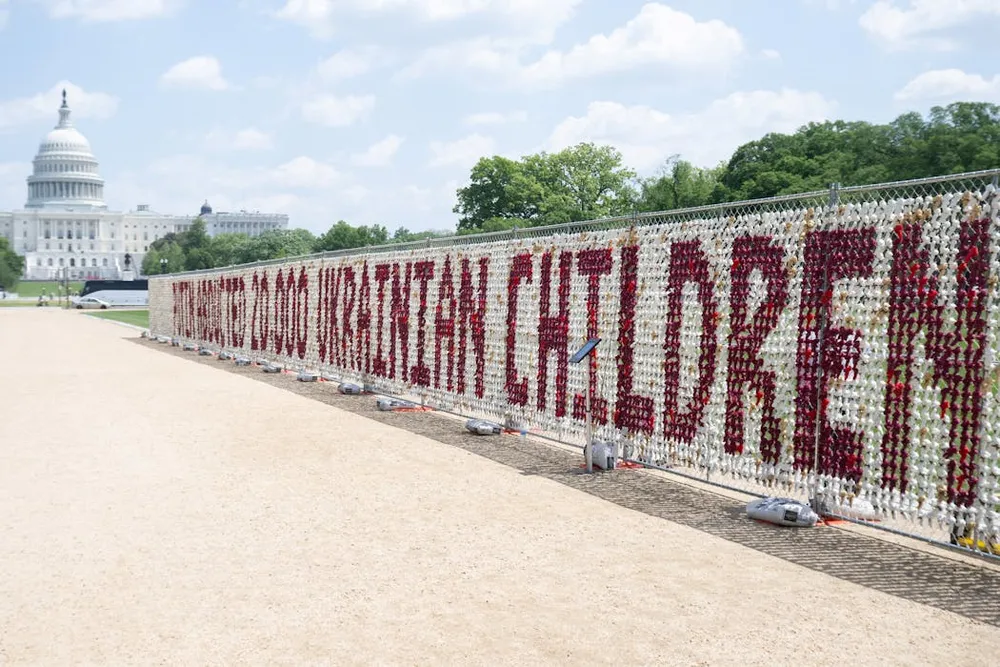
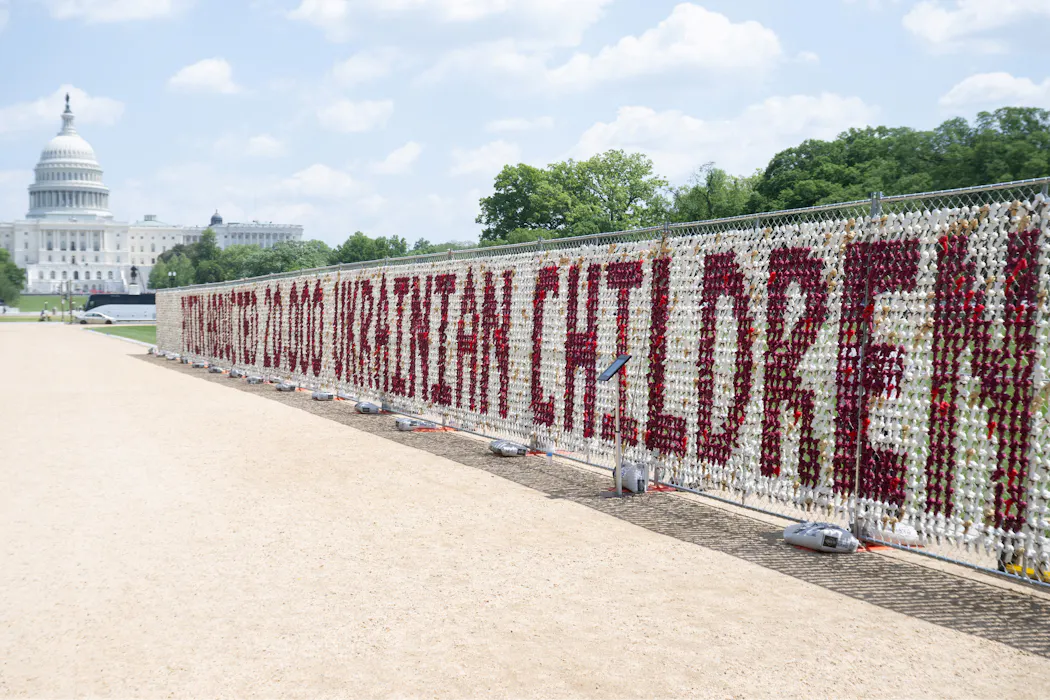
Ukraine’s Bring Kids Back UA, the official tracker of abducted children, lists over 20,000 possible cases of forcible deportation and transfer of children by Russia. However, Yale University’s Humanitarian Research Lab estimates the number is closer to 35,000.
Only a fraction have returned.
The precise number is difficult to establish because Russia has not provided complete or verifiable information about the Ukrainian children it has forcibly transferred or deported, or their whereabouts.
International humanitarian law prohibits the forcible transfer or deportation of children from occupied territory except in narrowly defined emergency circumstances. Even then, evacuations must be temporary, preserve family unity, maintain records to facilitate reunification, and, when children must be moved outside occupied territory, take them to a neutral country rather than the territory of the occupying power.
Instead, many Ukrainian children have been coercively transferred into camps – organized sites used to house, instruct, reeducate or militarize Ukrainian children – institutions and foster or adoptive placements inside Russia or Russian-controlled territory.
Some are told Ukraine abandoned them, that their families no longer want them, or that their future lies with Russia. In many cases, their names, citizenship and legal status have been changed, making them more difficult to identify and return.
But even the official Ukrainian count does not convey the full scale of the crisis.
Approximately 1.6 million Ukrainian children are believed to be living under Russian occupation or in territories Russia has controlled since 2014.
These children may never have crossed an international border, but their schools, documents, language, media and daily lives are being reorganized around Russian rule. They are required to attend schools using the Russian curriculum, where Ukrainian history and identity are replaced with Russian narratives. Ukrainian-language instruction has been eliminated in occupied areas, and many children have been issued or required to obtain Russian passports.
These measures are designed not simply to govern occupied territory but to reshape how children understand their history, citizenship and future
A child does not have to be carried across a border to be separated from Ukraine. Occupation itself can become a method of identity removal.
Language that sounds protective
To outsiders, some of Russia’s actions can be difficult to recognize because they are often described in official language that sounds humanitarian or routine.
During the first months of the invasion, Russian forces removed many children from orphanages, residential institutions and other forms of state care, transferring many into Russia or Russian-controlled territory.
Other children were separated from parents or relatives during attacks on their communities, chaotic evacuations and Russia’s “filtration” process – a system of screenings and interrogations used to control civilians fleeing occupied areas.
Once under Russian control, many Ukrainian children were transferred into Russian institutions or placed under guardianship or adopted, making reunification with their families increasingly difficult.
Words used by Russia to describe its actions, such as “evacuation,” “child protection,” “recreation camp,” “guardianship,” “foster care” and “adoption,” usually suggest that adults are protecting children.
In occupied Ukraine, these terms cannot be taken at face value. They must be understood within a system of coercion designed to separate children from their families, communities and Ukrainian identity.
The language of rescue can conceal the reality of coercion.
A Ukrainian teen describes how he found his way back home after being abducted by Russia.
Changing more than location
Russia’s strategy extends beyond physically removing children from Ukraine. It also seeks to reshape the lives of those who remain under occupation.
Over time, Russian schools, laws and public institutions reinforce the message that these children are Russian rather than Ukrainian, making that identity feel normal and permanent. Children sent to so-called “recreation,” “health” or educational camps inside Russia often experience the same process, as temporary stays are extended and return becomes increasingly difficult.
The goal is not simply to control territory but to influence how children understand themselves.
Russian authorities have portrayed Ukraine as an artificial nation and Ukrainians and Russians as “one people.” Children are especially important to that project of erasing Ukrainians’ independent identity because they carry a nation’s language, family history, citizenship and future. As they grow older, many are also pulled into an expanding system of military-patriotic education that presents service to Russia as a civic duty.
This effort has intensified since the full-scale invasion. Russia has dramatically increased spending on military-patriotic education, expanding youth organizations and military instruction in occupied territories, where participation is often mandatory.
Every day matters
The International Criminal Court issued arrest warrants in 2023 for Russian President Vladimir Putin and Russia’s commissioner for children’s rights, Maria Lvova-Belova, over the alleged unlawful deportation and transfer of Ukrainian children.
Yet international legal recognition of this crime has not been effective.
Russia controls the information needed to reunite children with their families. International organizations can document violations and press for returns, but they do not know where many children are and have little independent access to occupied territories or Russian institutions.
As a result, tracing and returning children has largely depended on Ukrainian families, government agencies and civil society organizations working case by case.
The new U.S. funding can help strengthen that work. But it will need to be provided over the long term to be effective. Identifying a child, reconstructing documents and arranging a safe return can take months. Recovery may take much longer. Many need help restoring documents, returning to school, reconnecting with relatives and rebuilding trust.
Oleksandra Matviichuk, chair of Ukraine’s Center for Civil Liberties, which was awarded the 2022 Nobel Peace Prize, told me that one obstacle to an effective international response is a “lack of imagination.” People living in stable societies can find it difficult to believe that a government could invade another country, occupy its territory and attempt to erase the identity of its children.
But that is happening now.
The question is whether the world will act before changed names, lost records and years of forced assimilation make the damage even harder – or impossible – to reverse.

Thom Reilly receives funding from The Rogers Foundation (Las Vegas, Nevada) to make the book open source and to support research assistants.
By Thom Reilly, Professor and Co-Director of the Center for an Independent and Sustainable Democracy, Arizona State University. This article is republished from The Conversation under a Creative Commons license. Read the original article.