For the first time in over 50 years, an infestation of the flesh-eating fly known as the New World screwworm (Cochliomyia hominivorax) is spreading on the U.S. mainland, and it is putting livestock and other animals at risk.
The New World screwworm doesn’t just attack cattle. All warm-blooded animals are susceptible, including deer and elk, as well as small game and waterfowl.
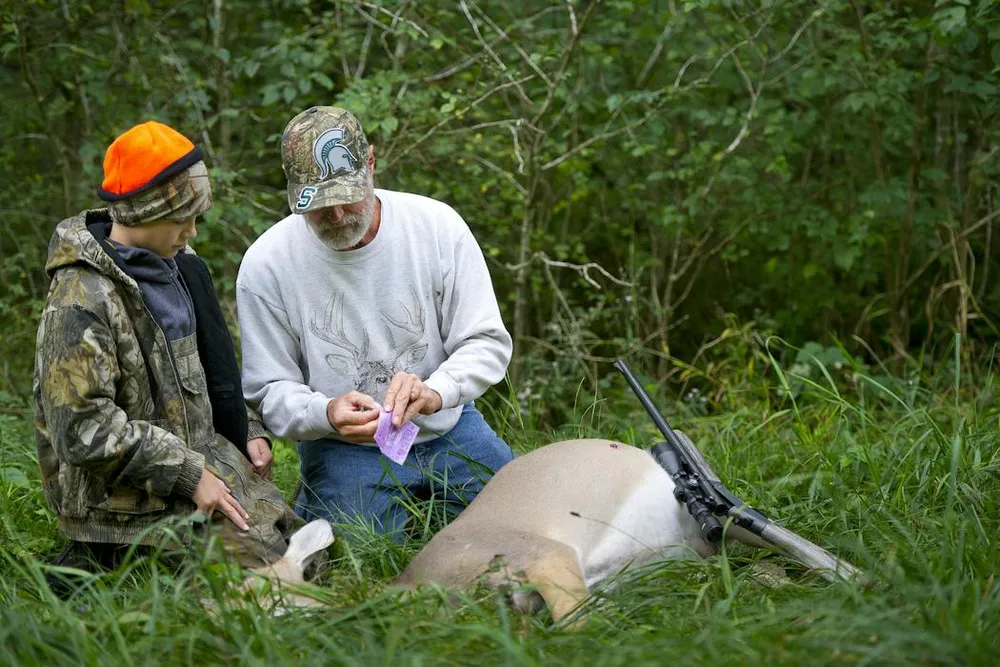
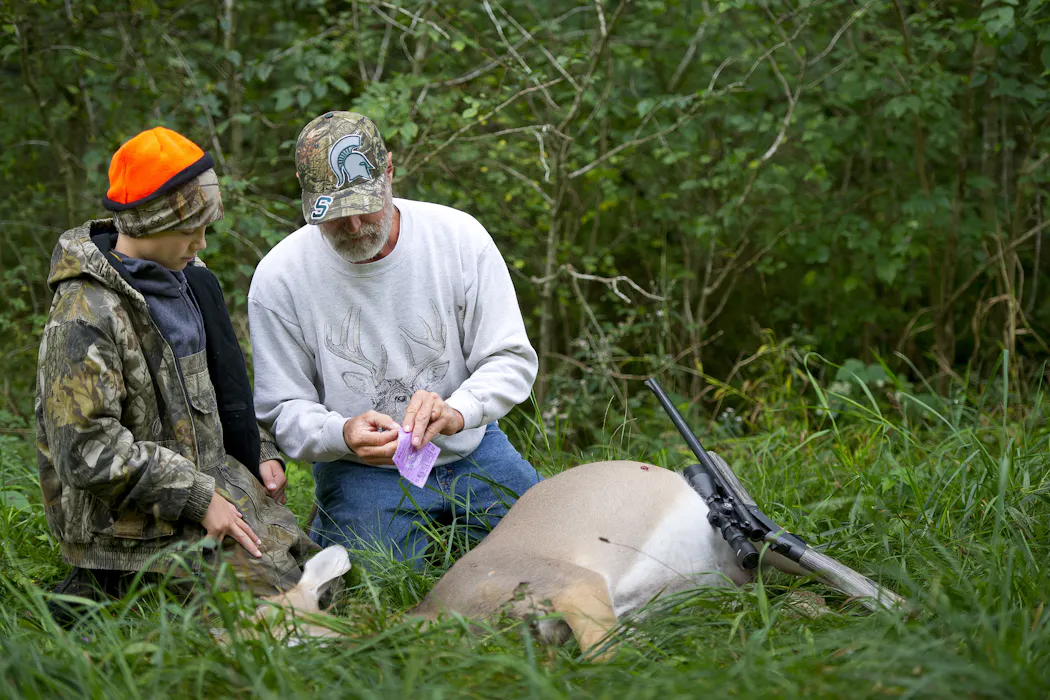
That means hunters headed to the field this fall may be the most important line of defense for spotting this destructive parasite and keeping it from spreading further.
As co-directors of the Mississippi State University deer lab, we believe the country’s millions of hunters can serve as a powerful early warning system by keeping a close eye on the state of wildlife they see. Wildlife agencies are already asking them to be vigilant and report any signs of screwworm infestations.
The problem with screwworm
Unlike other blowflies, New World screwworm larvae feed on living tissue rather than dead tissue. They lay eggs in open wounds or mucosal openings, such as the eyes and nose of livestock, deer or elk.


Wounds as small as tick bites or scratches, as well as natural openings such as the umbilical stump on newborns or on deer’s pedicles, where their antlers grow and are shed, can attract these parasites.
Once the eggs hatch, the maggots burrow into the animal’s flesh and feed, enlarging the wound and attracting more flies. Over time, this leads to infection and death.
How the US eradicated screwworm in the past
All warm-blooded animals are susceptible to the New World screwworm, but America has seen firsthand the harm they can cause to livestock.
In the 1950s, livestock producers in the U.S. Southwest lost up to US$100 million annually to New World screwworm infections, equivalent to over $1 billion today.

The nation was eventually able to eradicate the New World screwworm from the mainland in 1966 using a combination of treating infected animals and raising hundreds of millions of sterilized male flies and releasing them in infested areas.
The New World screwworm has a life cycle of only about 21 days, and each female mates only once. Because of that, inundating areas with sterile male flies for a few months, which equates to a few generations of flies, can eradicate a screwworm population.

Over time, sterile flies were used to push the New World screwworm further south, where they had been contained behind the Darién Gap, Panama’s narrow border region with Colombia. Sterile flies kept the parasite south of Panama for years, but the movement of cattle and wildlife likely brought it north again. Since 2022, the parasites have been reproducing and moving farther northward. There have been hundreds of detections in Mexico and now in the U.S.
The Florida Key deer infestation
Wildlife have received far less attention than livestock during screwworm infestations, with one exception: In July 2016, the New World screwworm was detected in the Florida Keys in an endangered deer population: the Florida Key deer (Odocoileus virginianus clavium).

At the time, the Florida Key deer population was estimated at only about 800 to 1,000 individuals. Because they were endangered and isolated, primarily on the islands of Big Pine Key and No Name Key, they were monitored more closely than most wildlife.
U.S. Fish and Wildlife Service biologists established quarantine zones. They inspected more than 16,900 animals – dogs, cats, a pig and a raccoon were also found with larvae – and they released 150 million sterile flies across the area. The islands lost 9% to 20% of the total Key Deer population, but the New World screwworm was declared eradicated there on March 23, 2017, less than a year after it was discovered.
Screwworm is back
In June 2026, screwworm was back in the United States. A rancher discovered the first New World screwworm case in a calf near La Pryor, Texas. A few more cases were confirmed in livestock and domestic animals in Texas and New Mexico.
The number of cases had reached 116 detections in animals as of Nov. 5, 2026, including in two elk shot by hunters in Texas. The U.S. government has started ramping up production of sterile flies to try to keep the parasites from spreading.

Although there have been only a couple of cases reported in wildlife, that isn’t necessarily reassuring.
Wildlife are far more likely to carry the parasite without being detected. Once the screwworm is detected, treatment would also be much more complicated for wildlife than for livestock, because wildlife cannot be treated individually and thus are more dependent on the use of sterile flies to eradicate screwworm.
For this reason, quickly identifying areas with New World screwworm and targeting those areas by releasing sterile flies would be more important than ever.
Tapping an army of conservationists: Hunters
Fortunately, there is an army of conservationists across the country who spend much of their time afield. These conservationists are also known as hunters.
According to the latest U.S. Fish and Wildlife Service National Survey of Fishing, Hunting, and Wildlife-Associated Recreation, nearly 11.5 million hunters pursue big game and spend part of the fall and winter in the field hunting ungulate species such as deer and elk.

White-tailed deer (Odocoileus virginianus) hunters alone are expected to harvest about 6 million deer during the 2026-27 season and will observe millions more. Hunters also review tens of millions of wildlife pictures collected each year by game cameras used for scouting.
That level of surveillance can’t be matched. New Mexico’s Department of Agriculture has already called on hunters to report any suspicious larvae, particularly in Grant and Otero counties, where screwworm has been found in livestock. Hunters of all kinds, everywhere, can help.
What to watch for as a hunter
If you’re a hunter, be on the lookout for wounded animals, especially those with visible maggots, and for unusual behaviors such as restlessness, lethargy, or biting or licking wounds.
Do not move harvested animals from the field if they show signs of a New World screwworm infection. Doing so could further spread the parasite. Instead, contact the area’s state wildlife agency, the U.S. Department of Agriculture office or a local veterinarian immediately.
As hunting seasons get underway across the country, an army of conservationists will be in the field, and they have an important role to play in detecting and managing screwworm’s spread.
Hunters already contribute to conservation through license fees, excise taxes and keeping wildlife populations at healthy densities. In the face of New World screwworm, their observations may be most valuable for protecting livestock.

The authors do not work for, consult, own shares in or receive funding from any company or organization that would benefit from this article, and have disclosed no relevant affiliations beyond their academic appointment.
By Jacob Dykes, Assistant Professor of Wildlife Management, Mississippi State University, Eric Michel, Assistant Professor of Wildlife Management, Mississippi State University. This article is republished from The Conversation under a Creative Commons license. Read the original article.