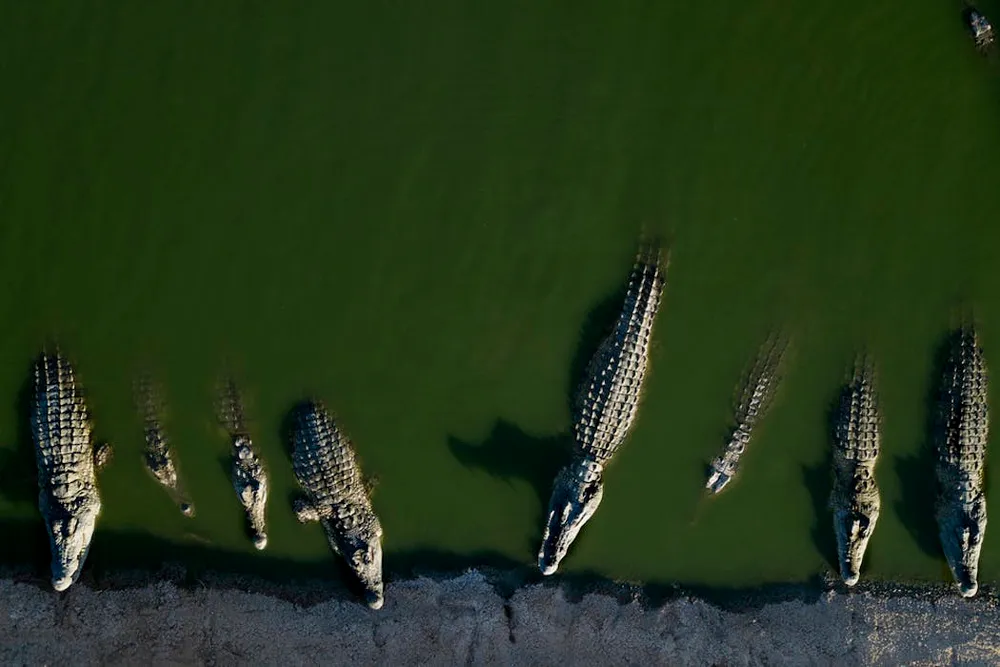
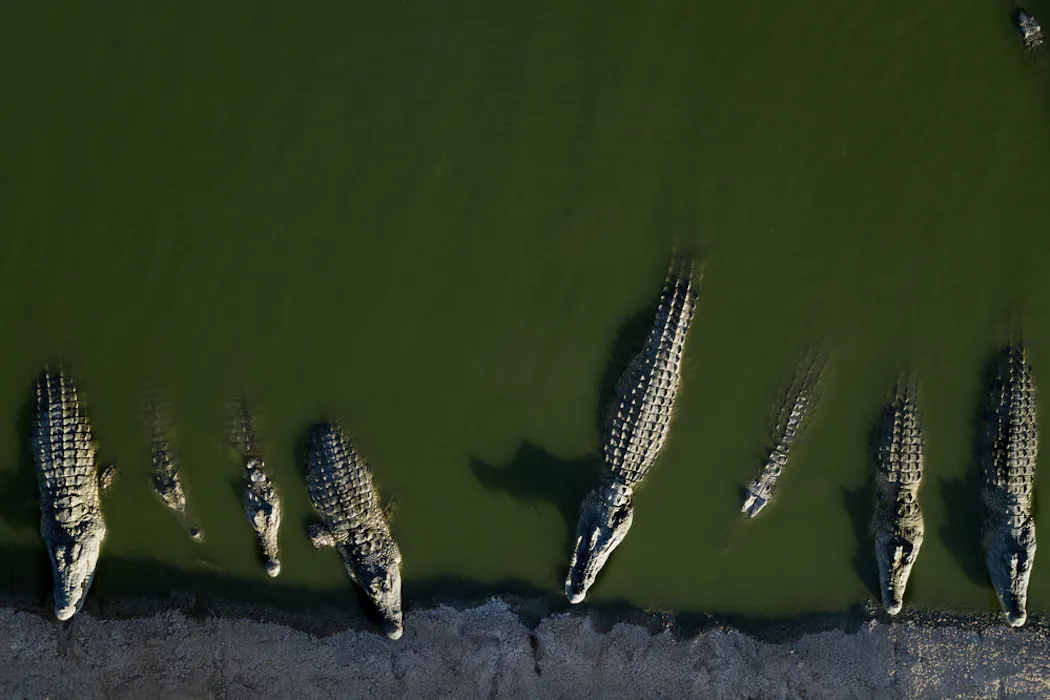
When Israeli National Security Minister Itamar Ben-Gvir proposed surrounding a prison holding Palestinian security detainees with Nile crocodiles, many people dismissed the idea as political theater.
After all, the image of crocodiles patrolling a prison moat seemed so outlandish that it was easy to treat as a publicity stunt. Similar claims were also directed at Donald Trump’s now-shuttered Alligator Alcatraz in Florida, which appeared to serve as inspiration for the new Israeli crocodile project.
Yet despite a temporary injunction by an Israeli court preventing the transfer of crocodiles to the proposed site at Ketziot prison, Ben-Gvir and others in the Israeli government are forging ahead. On Aug. 5, 2026, just three days after the Jerusalem District Court issued the injunction, Ben-Gvir and Environmental Protection Minister Idit Silman visited the site, posing on a bridge overlooking a partially constructed moat and posting defiant messages on social media.
Regardless of whether Ben-Gvir’s crocodile prison is ever constructed, the very existence of this plan is revealing. As someone who studies the intersection of settler colonialism and environmental governance, I believe it highlights a longer history in which animals have been weaponized to advance settler colonial projects of dispossession, territorial control and dehumanization.
The legal life of the Nile crocodile
Nile crocodiles were thriving in parts of what are now Israel and the Palestinian territories until the late 19th century. But habitat destruction and the drainage of wetlands in the area during the late Ottoman and British mandate periods led to their eradication from the region by the early 20th century, a process that unfolded in tandem with the dispossession of local marsh-dwelling communities from this area.
Decades later, crocodiles reappeared in the region in a radically different role – not as wild animals, but as commodities. They were brought back through crocodile farms, which marketed the animals as tourist attractions and sought to profit from their skins for the luxury leather trade.
While crocodiles have been classified as “protected wildlife” under Israeli law since the 1950s, a 1990 amendment carved out an exception by introducing the category of “cultivated wildlife.”
Subsequently, in the 1990s and 2000s, crocodile farms emerged across Israel and the Palestinian territories. One of the most prominent farms was at Hamat Gader, a tourist site near the Jordanian border, where visitors watched handlers wrestle crocodiles, force open their jaws and flip them onto their backs. These spectacles drew criticism from animal welfare advocates, who sued the farm. Their challenge became the first major test of Israel’s newly enacted 1994 animal welfare law.
The resulting decision — Let the Animals Live v. Hamat Gader — is widely regarded as a landmark ruling on animal welfare in Israeli law. The court concluded that the suffering inflicted on the crocodiles could not be justified by the entertainment provided to visitors, recognizing animals as subjects of legal concern rather than mere property.
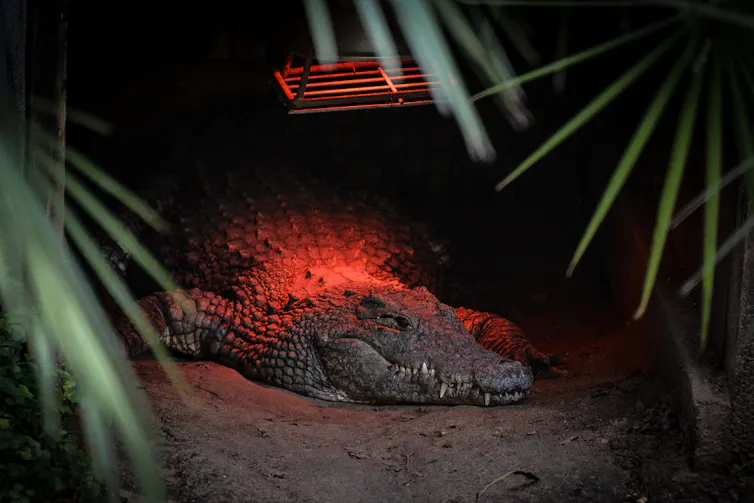
In 2007, the Israeli government moved to formally declare three species – American alligators, ostriches and Nile crocodiles – as falling under the “cultivated wildlife” category created nearly two decades earlier by the amendment to the Israeli environmental law. This special legal category provided official permits for the animals’ commercial breeding, while they remained subject to state supervision.
Meanwhile, however, crocodiles escaping from the farms triggered public safety concerns. By the early 2010s, officials concluded that the breeding experiment had failed and revoked the “cultivated wildlife” designation.
But then there was another problem: What to do with hundreds of captive crocodiles that could neither be released nor easily relocated?
The dilemma became particularly visible in 2025, when Israeli authorities killed 262 crocodiles at a breeding facility in the Jordan Valley. The officials argued that the facility was negligent in caring for the animals and that the crocodiles therefore posed a public safety risk that justified the violent measures.
A dehumanizing form of punishment
In 2026, acting on Ben-Gvir’s request, environmental minister Silman revived the dormant category of “cultivated wildlife” to allow state agencies to keep crocodiles for what she classified as “security purposes.”
This decision has encountered widespread opposition from Israeli nature conservation experts and legal advisers, including the environment minister’s own legal adviser.
In addition to crocodile welfare issues, critics have pointed out that crocodiles are poorly suited for prison security: They spend long periods inactive, especially in cooler weather, and modern prisons already possess far more effective technologies for surveillance and confinement.
In an urgent appeal to Silman on Aug. 16, 36 of Israel’s top ecologists and conservation experts warned about the dire consequences of such a move to both the crocodiles and the public at large.
“The question of who those prisoners are is not relevant,” they wrote in the appeal. “The question is who we are, what we want to be, and how we want to be seen by ourselves and by the world.”

Despite the broad opposition, Ben-Gvir has remained resolute, previously declaring: “Whoever murdered, massacred and raped, and behaved like an animal, deserves to be guarded by an animal, exactly like them.”
His comments reveal the crux of the matter. Crocodiles are not deployed here because they are efficient security tools. Rather, their appeal lies in what they symbolize: ancient, armored and predatory, crocodiles evoke fears that prison walls, cameras and sensors do not.
Ben-Gvir and Silman’s visit to the prison on Aug. 5 underscored this message. Speaking to the cameras, Silman proclaimed that the crocodiles’ welfare outside would surely be much better than that of the Palestinian prisoners inside.
The comparison drawn here between humans and nonhumans is telling. It fits a form of dehumanization that I refer to as “zoometrics.” When a human is compared to an unliked animal – as Palestinians regularly have been – then the perceived value of the human diminishes even lower than of that animal. Studies across diverse geopolitical contexts, including my own work, have shown that such comparisons often precede – and can thus predict – acts of extreme violence.
The temporary injunction against transferring the crocodiles to the prison remains in effect while the case proceeds through the court system. Meanwhile, Ben-Gvir condemned the injunction as pro-terrorist and has been continuing construction at full speed. The Israeli government has already allocated around US$7 million for the project and hired an expert architect to design the structures, which include shade for the crocodiles.
Crocodile tears?
The crocodile’s journey under Israeli law – from protected wildlife to commercial commodity and, finally, potential security asset – reveals that legal classifications do not only regulate animals; they also determine their prospects for life or death.
More broadly, the crocodile prison proposal demonstrates how settler colonial agendas enlist and weaponize not only humans but also animals and environments.
This dynamic is not unique to crocodiles. Israel has been training and deploying its own dogs for military combat while simultaneously rescuing dogs the Gaza Strip in humanitarian missions and finding them new Israeli homes. Likewise, settler-owned sheep, donkeys, goats and cows have been deployed by Israeli shepherds for territorial takeover, whereas the same animals, when owned by Palestinian pastoralists, have been subjected to violent attacks.
The crocodile is merely the latest example of Israel’s ongoing weaponization of nonhuman life.

Irus Braverman does not work for, consult, own shares in or receive funding from any company or organization that would benefit from this article, and has disclosed no relevant affiliations beyond their academic appointment.
By Irus Braverman, SUNY Distinguished & Dr. Teresa A. Miller Professor of Law, Adjunct Professor of Geography, and Research Professor at the Department of Environment & Sustainability, University at Buffalo. This article is republished from The Conversation under a Creative Commons license. Read the original article.