Few historic figures are as divisive as Christopher Columbus. For some, in both Spain and the United States, he remains a great hero, an explorer who found a “new world.” He is reviled by others who see him as an arrogant conqueror: the first European to enslave Indigenous Americans, and the man who launched ecological destruction in the Western Hemisphere.
As a historian who writes about early encounters between Europeans, Indigenous Americans and Africans in North America, I believe it is important to recapture this period as much as we can from existing documents – including Columbus’ own writings. Those texts reveal the enormous importance the push to spread Christianity played in Europeans’ colonial plans from the start.
In my 2026 book, “Contested Continent: The Struggle for North America, c. 1000-1680,” I describe how Europeans’ religious desires shaped the creation of American colonies that benefited conquerors, at a high cost to those they displaced or enslaved. In the Americas, the linkage of religious purpose and the eager pursuit of glory and wealth began in 1492.
Before Columbus
Long before Columbus set sail, Europeans were already eager to expand their faith – and territory. Centuries earlier, Crusaders had ridden into the Middle East to reclaim what they saw as their holy land from Muslims.
That contest took place in Spain as well. Muslim armies had invaded from North Africa in the 700s, and Muslim rulers eventually governed much of the peninsula. Spanish and Portuguese leaders waged the Reconquista, a centuries-long war that concluded with the 1492 expulsion of Jews and the defeat of the last Muslim stronghold in Granada.
By then, the Portuguese had laid claim to uninhabited mid-Atlantic islands, including the Azores and Madeira.
They also colonized the Canary Islands and forced local inhabitants into slavery on their plantations. In 1479, Portugal ceded control of the the Canary Islands to Spain in a treaty to end a war between the two nations. Spaniards expanded the importation of enslaved Africans to produce sugar.
First voyage
Columbus wanted to find the fastest way to get to the southwest Pacific to bring home exotic spices. He searched for sponsors to support his idea that Europeans could reach the the Spice Islands by sailing west across the Atlantic. Spain’s Queen Isabella of Castile and King Ferdinand II of Aragon provided funds to fit out three ships.

After his return, Columbus wrote a letter to his patrons, describing how, after 33 days at sea, he landed in the Bahamas. He labeled the people he met “Indios” because he thought he had reached Asia. The name stuck even though he was wrong about his point of arrival.
On his first voyage, Columbus claimed and renamed multiple islands, starting with San Salvador, or “Holy Savior.” “To the first of them I have given the name of our blessed Saviour, (with) whose aid I have reached this and all the rest,” he wrote. He named places after his patrons, too, along with other Christian names, such as Santa Maria de Concepion – Holy Mary of the Conception – and Navidad, Nativity.
He also laid claim to at least some Tainos. “I took by force some Indians from the first island,” he wrote, reporting that he wanted to teach them Spanish so they could “tell us what they knew” about environments new to him.
Soon after he returned to Spain, Columbus had the text printed. He wrote that “the whole of Christendom should rejoice” at discoveries he had made for his patrons “for all the glory they will receive when so many peoples turn to our Holy Faith.”

Within a few short years his words spread across Europe, translated from one language into another. Ferdinand and Isabella named him “Admiral of the Ocean Sea.”
Columbus returned to the islands on three subsequent journeys. On the second, he dispatched a friar named Ramón Pané to live among the people of Hispaniola, record their beliefs and find strategies for converting them to Christianity.
Conquest and Christianity
Word soon spread that Columbus had allowed forced labor of Indigenous peoples. In 1500, he returned to Spain in chains to face charges of incompetent administration of the colonies and enslaving subjects of the realm.
Eager to get back into his patrons’ good graces – especially Isabella’s, since she was the most alarmed at his actions – he became consumed by the history and theology of the church. He studied scripture as well as the writings of prominent theologians, including St. Augustine and the 15th-century French cardinal and astrologer Pierre d'Ailly.
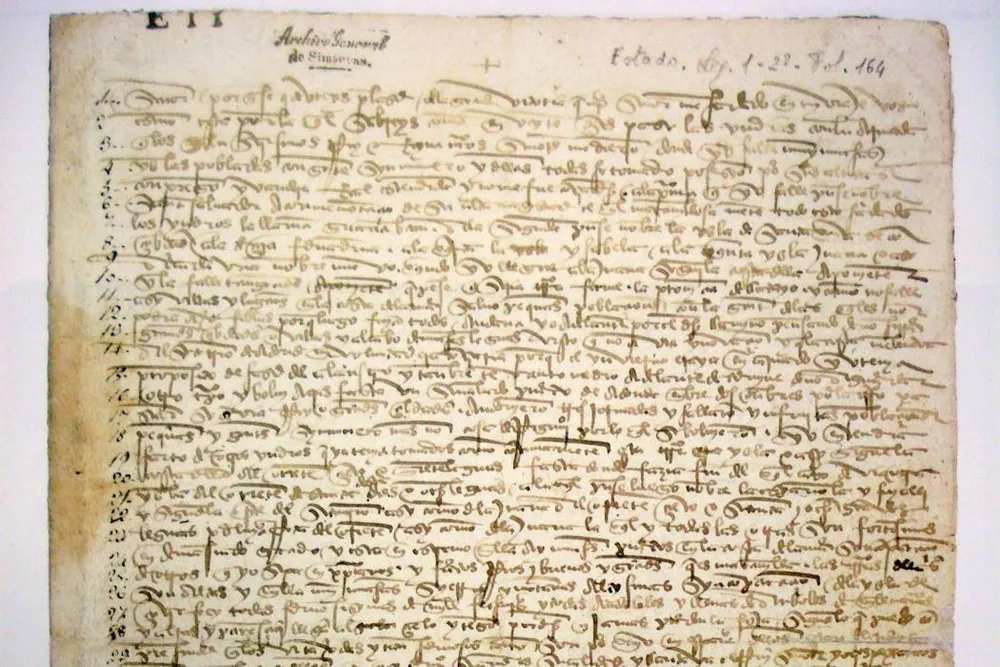
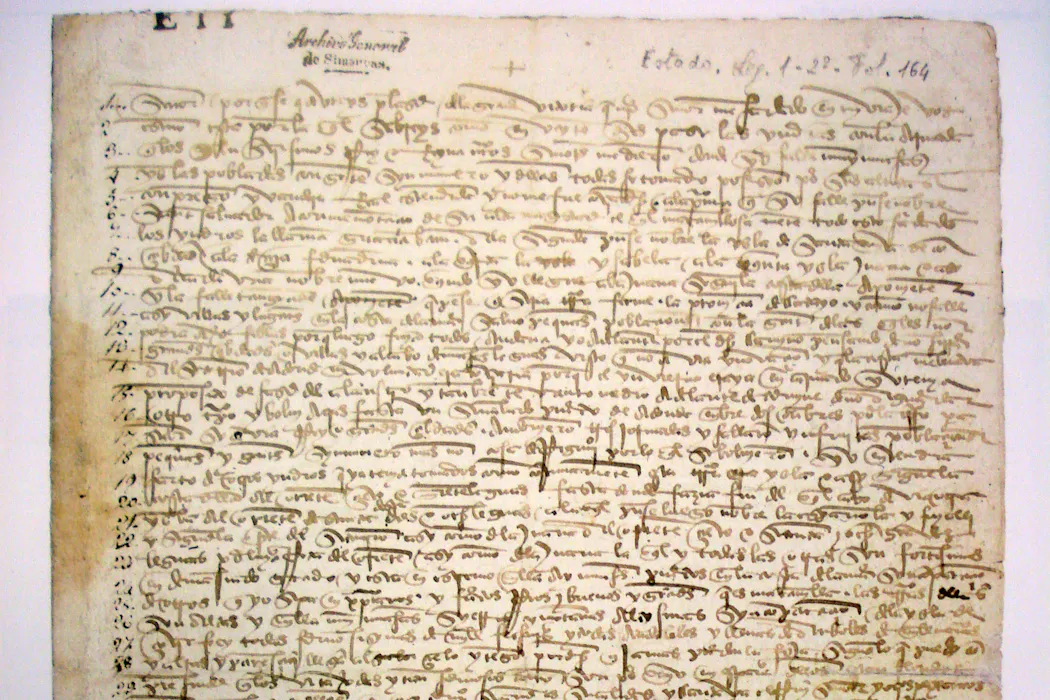
Like a magpie on a spiritual quest, Columbus transcribed portions from the Bible and scholars into a kind of commonplace book – a journal where he recorded parts of scripture and other writings, including his own notes. He intended the book for his queen and king, though it is likely they never saw it.
Nonetheless, their condemnation softened and they gave him permission to return to the Indies. He probably took the book along on his fourth journey of 1504. His son Ferdinand, who promoted his father’s legacy, called it the “Book of Prophecies.”

Columbus told a powerful tale in its pages. He believed that God had endowed him with remarkable intelligence, despite enemies’ allegations that he was “an uneducated man, an uninformed sailor, an ordinary person.”
Columbus compared his struggles with those of biblical prophets, saying he was like Isaiah, who “was not just a prophet, but also an evangelist” who called “all people to our holy Catholic faith.” He wrote about the discovery of islands and converting “all peoples and nations.” He reported that the Roman historian Seneca had prophesied that “a large landmass” would appear during “the last years of the world,” adding that a “new sailor” would “discover a new world.”
In this book, which was not published in his lifetime, Columbus recast the renaming and charting of Caribbean islands as a religious pursuit. He used Scripture to try to understand its geography, specifically seeking the Mount Zion mentioned in the Bible. He believed he had uncovered the Caribbean’s secrets because he had divine support for his task. The explorer wanted his royal patrons to see his role in history as something foretold by the ancients.
A complicated legacy
Columbus’ reputation has suffered over the years, with greater focus on what followed his voyages, including the spread of enslavement and environmental destruction. As one scholar put it in 1992, amid commemorations of the 500th anniversary of his first journey, the explorer was “mugged on the way to his own party.”

In recent years, protesters have torn down his statues and splattered others with red paint. His defenders have dredged statues out of rivers and remounted them. Each side has focused on his actions and their impact rather than his writings.
In those texts, the conquest and colonization of the Western Hemisphere were inseparable from religious conversion. His actions echoed in subsequent generations, evident in other Europeans’ efforts to spread Christianity in the Americas. Catholic Iberians, English Anglicans and Puritans, and French Huguenots all latched onto that same idea: the hemisphere should become integrated into Christendom.

Peter C. Mancall has received funding for his research from the National Endowment for the Humanities, the Huntington Library, Oxford University, and the University of Southern California.
By Peter C. Mancall, Distinguished Professor and Professor of the Humanities, USC Dornsife College of Letters, Arts and Sciences. This article is republished from The Conversation under a Creative Commons license. Read the original article.