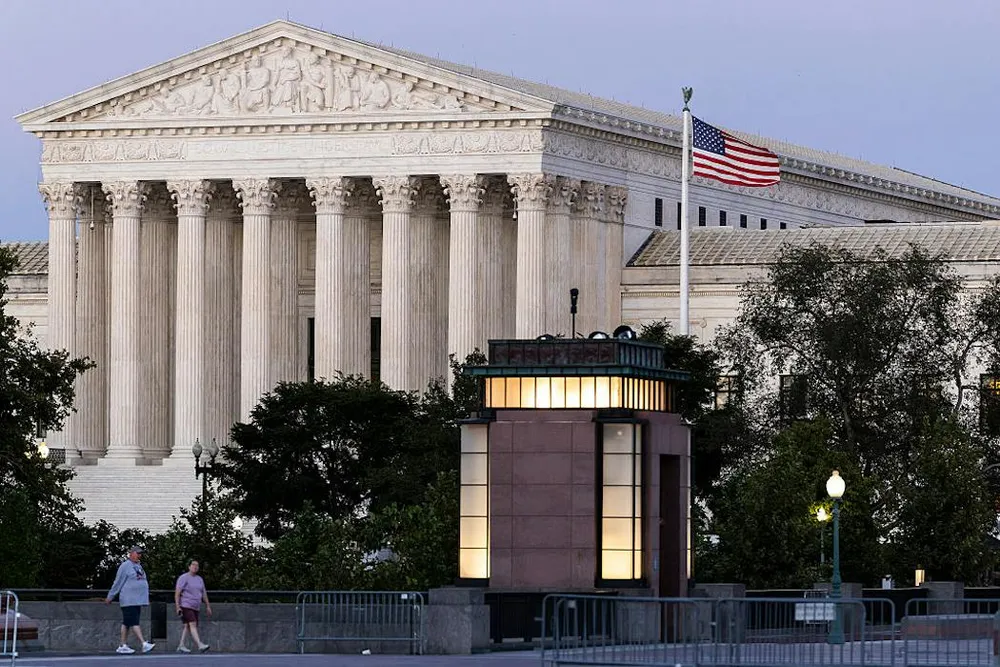
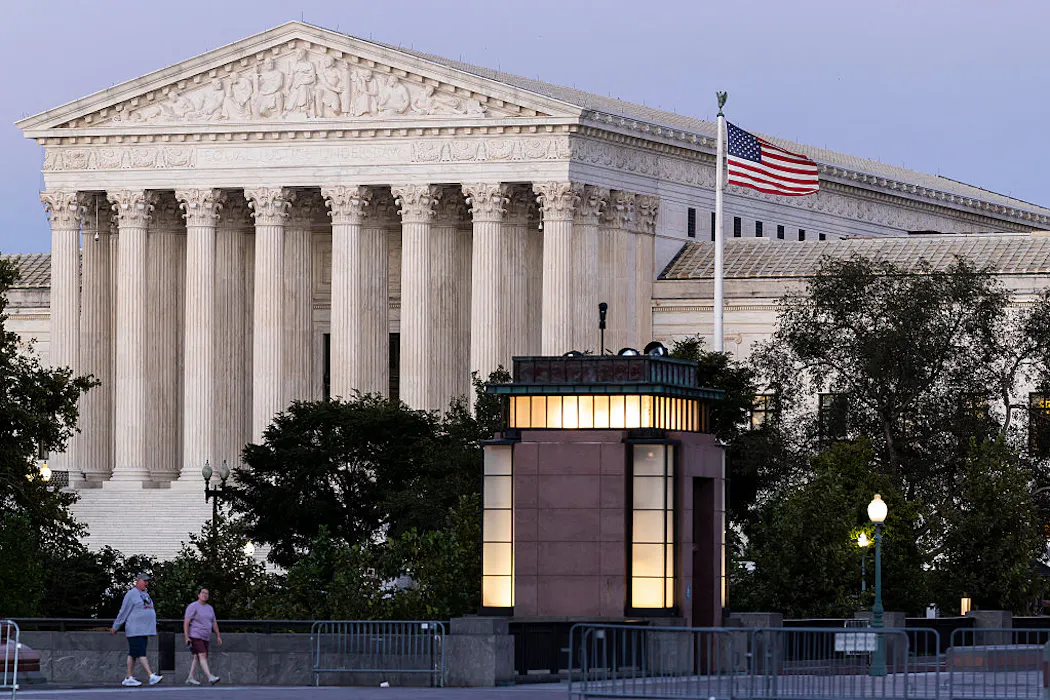
Just over a year ago, the U.S. Supreme Court rendered an unusual judgment: a tied vote.
Without stating why, Justice Amy Coney Barrett recused herself from Oklahoma Statewide Charter School Board v. Drummond, a case about whether it would have been constitutional to open a Catholic charter school. The remaining justices deadlocked 4-4, leaving in place lower court rulings that blocked the school. Oklahoma courts agreed that allowing state funding to a religious school would have violated both Oklahoma law and the First Amendment to the U.S. Constitution.
Now, a new contender is attempting to become America’s first religious charter school. On Sept. 24, 2026, a federal court judge allowed a suit to proceed from Ben Gamla, a Jewish organization whose application to participate in Oklahoma’s charter school program was denied earlier this year.
This yearslong controversy goes to the heart of questions about how much public aid is permissible to faith-based institutions under the First Amendment’s establishment clause, which forbids the government from making laws “respecting an establishment of religion.” More broadly, it reflects tensions over religion’s place in public life – while highlighting the Supreme Court’s increasingly friendly attitude toward faith-based schools.
Charter schools
Ben Gamla operates a network of secular charter schools in Florida that teach in Hebrew and English. Its application in Oklahoma proposes a school that would provide both secular and religious education.
The charter school movement began in earnest in the United States in 1991, starting in Minnesota. Forty-six states and the District of Columbia now permit them to operate.

Charter schools differ significantly from other public schools. Though funded with taxpayer money, they are typically run by private organizations, under charters that can be renewed or terminated depending on whether schools meet their stated goals. While free from many state laws and regulations about staff and curricula, charter schools remain subject to federal and local antidiscrimination laws.
New era
Under Oklahoma’s Constitution, no public funds can support religious institutions. Historically, the U.S. Supreme Court also placed significant limits on aid to faith-based schools, although not as strict as those enforced by Oklahoma and some other states.
Under what is known as the “child benefit test,” the court allowed some forms of aid, such as laws reimbursing parents for the costs of transportation to school and lending textbooks for secular instruction, because the direct beneficiaries were students rather than their schools.
Three recent Supreme Court cases, though, loosened the restrictions on aid to faith-based schools and families.
The first, 2017’s Trinity Lutheran v. Comer, arose after a church preschool in Missouri was denied funds from a public program to improve playground safety. The court ruled that denying faith-based institutions generally available benefits for which they are otherwise qualified violates the First Amendment’s free exercise clause, which says the government cannot make a law “prohibiting the free exercise” of religion.
Excluding faith-based institutions and believers solely because they are religious “is odious to our Constitution,” the court emphasized. Trinity Lutheran ushered in a new era of its First Amendment jurisprudence by expanding the boundaries of permissible aid.

Three years later, in Espinoza v. Montana Department of Revenue, a dispute arose over a tax credit program for contributions to student scholarship organizations. The state constitution prohibits public aid to “sectarian” schools, so Montana did not allow families that received these scholarships to use them at religious schools.
The Supreme Court reasoned that using the scholarships at faith-based schools would be acceptable under the U.S. Constitution’s establishment clause. The majority concluded that Montana’s no-aid provision discriminated against people based on their beliefs. The court added that because Montana’s rule separated religion and state more strictly than the establishment clause, it was unconstitutional – a distinction that may prove important in the Ben Gamla case.
Finally, in 2022, the court took up Carson v. Makin, a case from Maine. The justices invalidated Maine’s attempt to exclude faith-based schools from a program providing tuition assistance to families who lived in areas without their own public schools. The court reasoned that Maine’s program violated the free exercise clause because it was not “neutral” toward religion: It impermissibly excluded otherwise eligible institutions and families solely because they were religious.
Next steps
Returning to Oklahoma, the September 2026 ruling found that Ben Gamla had standing to pursue its claim that state officials violated the organization’s First Amendment rights to free exercise of religion.
However, Judge David L. Russell’s order does not resolve the underlying issue of religious charter schools once and for all. Rather, it allows the school’s application to proceed while the court considers the underling constitutional questions. Meanwhile, Oklahoma has 30 days to appeal the judgment to the 10th Circuit.
Coming on the heels of the Catholic charter school case, Ben Gamla might seem, as New York Yankees baseball great Yogi Berra once said, like a case of “déjà vu all over again.” Yet the litigation over Ben Gamla is different from the previous case involving St. Isidore of Seville Catholic Virtual School.
In 2024, when the Supreme Court of Oklahoma refused to let the state open St. Isidore, the justices primarily relied on the state constitution’s prohibition against using public money to benefit or support any religious institution.
In Ben Gamla, though, the trial court judge relied on federal case law. I believe this strengthens the chances that this case may make its way to the Supreme Court – and perhaps achieve a different outcome. In fact, Russell specifically cited the three recent Supreme Court decisions, among others, as supporting Ben Gamla’s argument that the U.S. Constitution permits aid to faith-based schools.
Russell emphasized that his order “does not express a judgment on the wisdom on the State of Oklahoma opening up its coffers to charter schools of disparate philosophical or educational provisions.” Having done so, however, state officials cannot “single out religious schools for exclusion solely because of their religious character.”
Ben Gamla may turn out to be the next step in the Supreme Court’s increasingly friendly approach to the important question of state aid to faith-based schools, their students and their parents. How this dispute plays out will tell us not only about the court’s thinking, but why supporters on both sides have such different visions over religion’s role – if any – in American education and public life.

Charles J. Russo does not work for, consult, own shares in or receive funding from any company or organization that would benefit from this article, and has disclosed no relevant affiliations beyond their academic appointment.
By Charles J. Russo, Joseph Panzer Chair in Education and Research Professor of Law, University of Dayton. This article is republished from The Conversation under a Creative Commons license. Read the original article.