Updated 8 October 2026: written warnings from Netanyahu's own security chiefs, reported on the anniversary, and renewed demands for an inquiry. See the end of this article.
Updated 4 October 2026: a reported phone call from Egypt's spy chief, Netanyahu's visit to the UAE, and the victims' families' own investigation.
On September 26, 2023, a chartered jet linked to Egyptian intelligence landed at Ben Gurion Airport, and spymaster Abbas Kamel spent about an hour telling Israeli officials that Gaza was close to combustion, The Atlantic reports.
Roughly two hours later, Benjamin Netanyahu took a stage 30 miles away to mark 50 years since the Yom Kippur War and lectured the country on missed intelligence warnings. Within weeks, Netanyahu's own ignored intelligence warnings would lead the way to the most devastating genocide the world has seen in decades.
The intelligence warning of a Hamas attack were so rampant and well known before October 7, that the decision to move troops away from Gaza before the attack commenced appears all too suspicious.
While some of these warnings have made the headlines, what those headlines fail to grasp is how many warnings arrived, and for how long Israel had to prepare for an attack before they weakened defences at the last moment.
It is a fact that Israeli leaders had Hamas' plan of attack a year before October 7, 2023, it is also a fact that they were aware of plans like these for years at that point. In total, we found 18 times Israeli leadership was warned of an attack from Hamas, 13 of those during 2023.
Years of warning
Long before the attack, the Israeli regime knew Hamas was planning a raid of this kind.
- September 2016: A top-secret Defense Ministry memo, signed by then-defense minister Avigdor Lieberman, warned that Hamas was preparing an invasion and hostage-taking operation.
- 2018: Egypt handed Netanyahu a document warning that money from Qatar, Turkey and Iran was going straight to Hamas's military wing.
- 2018: Shin Bet warned the National Security Council that Hamas had a plan for a broad raid and only lacked the money.
- 2019: Military intelligence repeatedly reported that Qatari cash was reaching the military wing. A senior officer testified to this before the State Comptroller, as reported by Yedioth and The Times of Israel.
- 2022: The IDF obtained Hamas's 40-page attack plan, known as Jericho Wall, more than a year in advance and dismissed it as aspirational.
2023: from foreign governments and back channels
Directly before the Hamas attack in October 2023, warnings from inside and outside Israel made it very clear to Israeli leadership that an attack was imminent. Israel's response to the was to remove security forces from Gaza just days before the attack.
- July 23: Military intelligence research chief Amit Saar sent Netanyahu a letter quoting a secret Hamas channel, codenamed "Srugim." The channel said the extremists in his government were lighting the fuses and that Israel alone would bear responsibility.
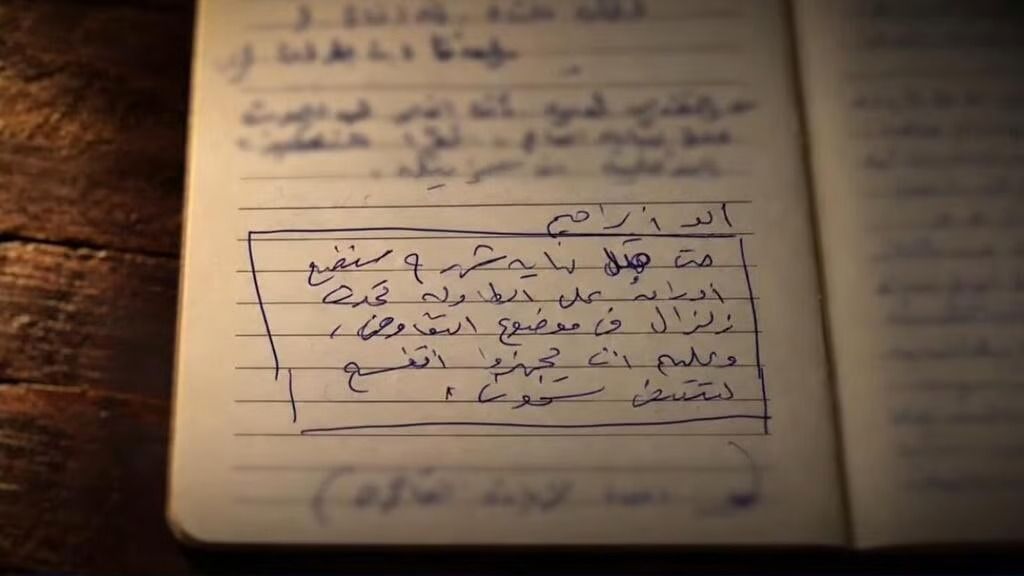
- Mid-September: Yahya Sinwar passed word through an intermediary that he was preparing an "earthquake." Shin Bet chief Ronen Bar reportedly carried it to Netanyahu on September 15, journalist Shlomi Eldar told Ynet.
- Late September: UAE president Mohammed bin Zayed spent 45 minutes on the phone telling Netanyahu that Sinwar was planning a major event. Haaretz reported the call, drawing on Eldar and Ruth Yuval's investigation. An Emirati source later confirmed it to The Times of Israel.
- September 26: Kamel flew into Ben Gurion and delivered his warning in person, according to The Atlantic.
- Before the attack: Egyptian intelligence repeatedly warned Israel that "something big" was coming. An Egyptian intelligence official told AP that Cairo had warned of an explosion that would come "very soon" and be big, and that Israeli officials, focused on the West Bank, underestimated the warnings. U.S. congressman Michael McCaul said Egypt had warned three days before the attack.
- Before the attack: Saudi Arabia had repeatedly warned that the continued occupation would lead to an explosion, its foreign ministry said in a statement on October 7.
- March to September: Amit Saar sent at least four written strategic warnings. In March, the army chief and the Shin Bet chief asked Netanyahu for an urgent private meeting, and he refused, N12 reports.
- July: A Unit 8200 analyst reported that Hamas training exercises mirrored Jericho Wall, down to the Quran verse quoted at the top of the document. A Gaza Division colonel dismissed her, according to the Times reporting.
- August: Former national security adviser Giora Eiland warned Netanyahu in person of an Iran-coordinated assault that would include Hamas. Eiland said this on the record to N12.
- September: Gaza border council heads warned publicly that the situation would end in disaster. Nine days before the attack, the government reopened the Erez crossing, N12 reports.
- September 19: A Gaza Division intelligence document titled "Detailed raid training from end to end" warned that Hamas was training for a large-scale invasion with mass hostage-taking. It reached at least some senior intelligence officials and was ignored, the Kan public broadcaster reported.
- Weeks before, through October 3: The border observers, most of them young women, reported Hamas drone activity and a scale model of their own observation post in a Hamas training camp. Their commanders dismissed them, they told Haaretz. Four days before the attack, they flagged a "highly irregular" drill of 170 fighters simulating rocket fire and the storming of Israeli tanks. Commanders wrote it off as routine, Kan reported.
- October 5 to 7: From the evening of October 5, Hamas gradually activated 45 Israeli SIM cards, which Shin Bet dismissed because a similar number had been switched on a year earlier. At 3:03 a.m. on October 7, Shin Bet alerted the National Security Council that the activations, along with other signs, could point to offensive activity. Shin Bet's own March 2025 probe laid this out, as reported by NPR. Its 05:15 assessment still called a broad attack unlikely, according to Netanyahu's submission to the State Comptroller, published by Channel 14.
Three people who sat in the most restricted security meetings before the attack told N12 that nobody in the room knew about the foreign warnings, from Egypt, the UAE and the Hamas back channels, except Netanyahu. The Israeli regime has stuck to their denial, but all the proof is sourced above. Tzachi Hanegbi, Netanyahu's national security adviser at the time, told The Atlantic that the Egyptian spy chief never landed at Ben Gurion on September 26, but we know he did.
Netanyahu is suing Haaretz for reporting that the UAE president phoned him with a warning days after the Egyptian security chief arrived to warn of the same attack. Netanyahu's own camp has undercut both denials. Channel 14, the station most loyal to him, ran a series built on Netanyahu's own submission to the State Comptroller, meant to show he had seen the danger coming.
His most loyal propagandists quote him telling a closed security meeting, a little over a month before the attack, "if this isn't bravado it will meet us fast, we'll meet it in the holidays." Hamas attacked on Simchat Torah, the last day of those holidays. By his own camp's account, Netanyahu predicted the timing and did nothing with it, in fact, less than doing nothing, his government moved troops away from Gaza.
Since we published, the warnings have kept coming. The Wall Street Journal reported that Abbas Kamel did not stop at his visit: days before the attack, he phoned Netanyahu himself. Netanyahu's office said he did not meet or speak with Kamel in the months before 7 October, and that he would sue for libel.
The Associated Press then reported that Netanyahu had flown to the United Arab Emirates and asked its president, Mohammed bin Zayed, to deny the earlier Haaretz report that he had warned Netanyahu by phone. Netanyahu's office said the talks were about ties between the two countries and called the Haaretz report an "absolute lie."
On 3 October the October Council, a group of families of people killed on 7 October, published the findings of its own investigation. It accuses Netanyahu of concealing information and dismissing repeated warnings, and demands a full state commission of inquiry. Netanyahu has refused one, saying a judge-led commission would be biased against him, Haaretz reported.
The attack killed about 1,195 people, lower than the initial 1,400 claimed by Israel. The genocide the regime has carried out in Gaza since then, confirmed by a UN commission of inquiry, has killed at least 74,237 Palestinians by Gaza health ministry figures, and the regime justified it as the response to a surprise attack, but as demonstrated, that attack was far from a surprise.
By our count, that surprise was flagged 18 times over seven years. Netanyahu faces voters on October 27, and his defence still amounts to saying that nobody told him.
Updated 8 October 2026: the warnings from inside
On 7 October, the third anniversary of the attack, Channel 12 reported that Netanyahu's own security chiefs warned him again and again through 2023 that Israel's internal crisis over the judicial overhaul was emboldening its enemies, as reported by The Times of Israel.
- 19 March 2023: Military intelligence research chief Amit Saar warned that Israel's enemies were debating whether to "sit on the fence and allow Israel to continue weakening itself" or to escalate.
- 21 March: Chief of staff Herzi Halevi sent his first strategic warning letter, saying the crisis had become "a central factor" in enemy assessments and was leading them toward "advancing offensive measures."
- 12 April: Military intelligence rated the likelihood of a multi-front escalation at its highest since the 2006 Lebanon war.
- 16 July and days after: Saar warned that the political crisis was encouraging Iran, Hezbollah and Hamas. Halevi then warned that enemies saw three pillars of deterrence eroding: the army's strength, social cohesion and ties with the United States. Netanyahu reportedly reacted angrily and blamed the protesters.
- August: Shin Bet chief Ronen Bar warned lawmakers of an approaching "perfect storm."
- 7 September: Defence Minister Yoav Gallant sent Netanyahu a seven-page letter citing military intelligence assessments that the crisis was eroding deterrence.
None of these named a date or described a Hamas invasion, so they are not part of our count of 18. They show that the prime minister was told in writing, by the heads of the army, the Shin Bet and the defence ministry, that his enemies saw an opening. Likud called the coverage "false political propaganda" and pointed to intelligence reports from 31 May and 23 July 2023 saying Hamas wanted stability and that the threat came from Hezbollah, the Jerusalem Post reported.
On the same day, opposition leader Yair Lapid asked: "If there was no intelligence warning, why did I convene a press conference on September 20 and warn of a security disaster?" He also said Netanyahu turned down proposals from the Shin Bet and the army on 1 October 2023 for a pre-emptive strike in Gaza, a claim that has not been independently confirmed. Gadi Eisenkot said a state commission of inquiry would be his first order of business if elected, the Jerusalem Post reported.
Donald Trump told Time on 1 October that he did not believe the reports. "I think if he would have known, he would have done something about it," he said, according to the Jerusalem Post.
The surveillance soldiers who reported Hamas's drills and were dismissed paid the highest price. Fifteen of them were killed at the Nahal Oz base on 7 October, The Times of Israel reported.