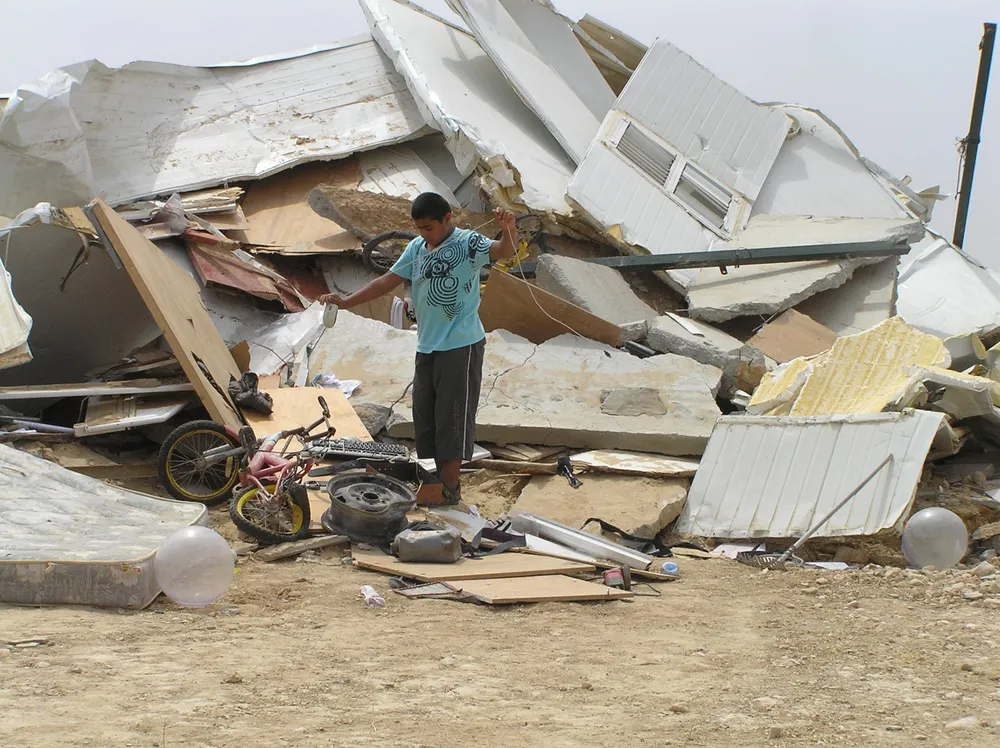
Israeli authorities have demolished homes belonging to the family of Youssef Ziadna, the Bedouin minibus driver who drove into the attack on the Nova festival on 7 October 2023 and carried 30 people out. Demolition crews arrived last month in al-Ziadna, an unrecognised village of about 5,000 people north of Rahat in the Negev, where around 65 homes and other buildings face demolition orders.
One of Ziadna's cousins tore down a house he had built for his son, who had married two weeks earlier, rather than wait for the state's bulldozers. Ziadna took down a warehouse on his own land to avoid the fines that come with a state demolition, and authorities have since posted eviction notices on five more homes. One of them belongs to Aatef al-Ziadna, whose son Abed al-Rahman was killed by Hamas at Zikim beach on 7 October.
President Isaac Herzog gave Ziadna Israel's highest civilian honour for bravery, and he lit a torch at the 2024 Independence Day ceremony. He now lives on NIS 1,800 a month in disability benefits and says the honours feel hollow. "In the end, you're still an Arab," he said. His request for a gun licence was refused, although he has received threats and still drives near the Gaza boundary.
Four members of Ziadna's wider family were taken into Gaza on 7 October. Bilal and Aisha were freed in November 2023, and Youssef and his son Hamza died in captivity, their bodies returned to Israel in January 2025. About 21 of the roughly 1,200 people killed in southern Israel that day were Bedouin citizens.
The Bedouin Settlement Authority calls the buildings "new and illegal construction" and says a 2021 plan for the neighbourhood was held up "partly because residents of the neighborhood have prevented it from being carried out." It has not allocated a single residential plot under that plan. Many Bedouin villages in the Negev were there before Israel was founded in 1948 and were never recognised. "We've been here since the British ruled, before Israel was established. We never moved," Ziadna said.
Israeli authorities demolished about 14,280 structures in the Negev between 2023 and 2025, an 81% rise on the previous three years, using figures from National Security Minister Itamar Ben-Gvir's own ministry. "I'm going to demolish more and more and more," Ben-Gvir said. Around the same time as the al-Ziadna demolitions, bulldozers destroyed about 80 homes and a mosque in the Abu Wadi community of al-Dahiya, leaving 380 people homeless, Rahat's mayor Talal al-Krenawi said.
Naama Lazimi, a Knesset member for the opposition Democrats, called Ziadna "an Israeli hero and a symbol of coexistence" and the demolition "a moral and ethical disgrace." Ziadna told the Israeli site Local Call that he does not regret what he did on 7 October. "These are our values. This is how we were raised," he said. "I will not leave my land."